Blog
How long should you stay in a sauna? Time, temperature and heat adaptation

Sauna sessions are more than a wellness trend—they are a deliberate tool for improving recovery, building resilience, supporting cardiovascular health and enhancing longevity. The benefits appear only when heat is applied deliberately and consistently. Too little heat, and your body does not adapt. Too much, and you risk unnecessary strain without reward.
At True North, we design saunas to deliver consistent, controlled heat for people who value measurable results. Understanding how long to stay in a sauna, at what temperature, and how your body adapts over time is essential for anyone serious about heat therapy.
Why sauna duration and temperature matter
The effectiveness of a sauna session depends on temperature, duration and your level of heat adaptation. Most advice focuses on “sit until it feels hot”, which is unreliable. Your body responds to heat in predictable ways, but only if you measure and control the exposure.
Temperature determines how quickly your core body temperature rises. This triggers the production of heat shock proteins, which protect cells, aid recovery, and improve overall cellular function. Duration dictates how long your body is under that stress, allowing adaptations to compound across multiple sessions. Heat adaptation describes how your body becomes more efficient under repeated heat exposure, leading to faster sweating, a stable heart rate, and improved circulation.
The optimal sauna temperature
Not all saunas provide the same results. For measurable performance benefits, the ideal range is 80–90°C. At these temperatures, the body experiences sufficient stress to activate heat shock proteins and stimulate cardiovascular adaptation without unnecessary risk. Temperatures below 70°C are generally too mild to drive meaningful physiological adaptation, while exposures above 100°C increase discomfort without additional benefit.
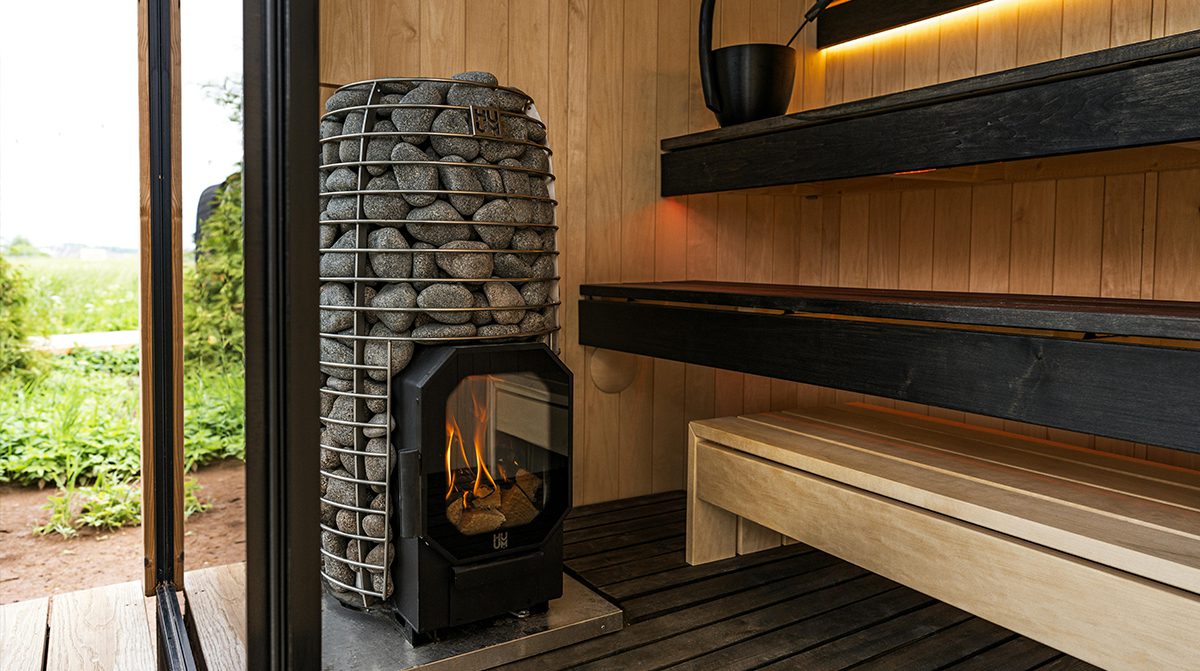
True North saunas are engineered to maintain this performance range reliably. Stable heat ensures that each session is consistent, repeatable and effective, eliminating the variability often experienced in traditional wood-fired saunas.
How long should you stay in the sauna? A progressive approach the optimal sauna temperature
Beginners, who are new to heat exposure, should start with shorter sessions of 8–12 minutes at 70–80°C. At this stage, sweating may begin slowly, and heart rate rises noticeably, but these responses are normal indicators that the body is beginning to adapt. The focus should be on calm, controlled breathing and observing physical signals, such as light-headedness, to maintain safety.
Intermediate users, with 15–40 sessions of experience, can extend their time to 12–18 minutes per round at 80–90°C. The body now tolerates heat more efficiently. Sweating begins earlier, heart rate stabilises, and perceived effort decreases. Sessions at this stage provide compounded benefits for cardiovascular conditioning, recovery, and overall resilience.
Advanced users, with more than 40 consistent sessions, can perform 15–20-minute sessions at 80–90°C. At this stage, heat tolerance is high, and the sauna becomes a reliable tool for recovery, longevity and cardiovascular health. Total weekly exposure of 55–70 minutes aligns with research linking sauna use to reduced cardiovascular risk and improved long-term health outcomes.
The role of humidity in sauna sessions
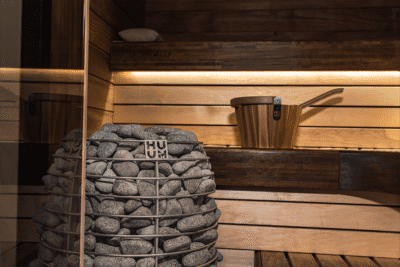
Humidity, created by adding water to sauna stones, increases perceived heat. Higher humidity allows the body to experience more intense thermal stress without raising the measured temperature, effectively shortening safe session lengths. Controlling humidity carefully ensures that each session is both challenging and safe, allowing predictable adaptation. True North saunas provide precise control over humidity, creating consistent, repeatable conditions for effective heat therapy.
Recognising when to end a session
Heat therapy requires active awareness. A session should end if dizziness, light-headedness, sudden chills, rapid or irregular heart rate, or difficulty maintaining posture occurs. These signals indicate the body has reached the upper limit of productive stress. Exceeding this point does not enhance adaptation; it increases risk and reduces session quality.
Understanding heat adaptation
Heat tolerance develops quickly. Within 10–20 sessions, most users experience earlier onset of sweating, more stable heart rate, and improved circulation. Adaptation is cumulative: consistent sessions build tolerance, while skipped sessions reduce it. Progression from beginner to advanced ensures that sauna practice is effective, safe, and performance-focused.
Structuring an effective sauna routine
An effective routine begins with moderate hydration and entering the sauna dry. During the session, remain seated upright, breathe calmly, and use humidity sparingly to maximise comfort and efficiency. Between rounds, allow the body to cool gradually and return heart rate toward baseline. After finishing, rehydrate and allow recovery before any intense physical activity. This structure supports consistent adaptation and measurable benefits.
Sauna duration for specific goals
For longevity and cardiovascular health, 80–90°C sessions totalling 55–70 minutes weekly provide optimal benefits. Recovery and training adaptation are best achieved with 10–20-minute sessions at 80–90°C, two to three times per week. Mental resilience develops through controlled exposure to the upper limits of comfort, while general wellbeing is supported by 70–85°C sessions of 10–15 minutes, two to three times weekly. Across all goals, consistency and controlled exposure are more important than session length or intensity.
Why true north saunas enhance results
Consistency drives adaptation. True North saunas deliver fast, predictable heat with precise temperature and humidity control. With minimal maintenance and reliable performance, each session provides a repeatable environment, allowing users to track progress, optimise recovery, and build resilience over time. This predictability transforms sauna use from a ritual into a measurable performance tool.
The benefits of sauna use depend on temperature, session duration, and consistent adaptation. Begin with manageable sessions, progress gradually, and maintain precision. Your environment shapes your physiological response; choose one engineered for discipline and measurable results. A True North sauna ensures that every session contributes to recovery, cardiovascular health, and long-term resilience.