Blog
Why most barrel saunas struggle to maintain performance heat

Barrel saunas are popular because they look distinctive and promise a traditional experience. Their curved profile is instantly recognisable, and they are marketed as simple, rustic and easy to assemble. But when it comes to maintaining high, consistent temperatures — the foundation of effective heat therapy — most barrel saunas fall short. The issue is not preference or aesthetics; it is physics, engineering and an unavoidable limitation of their shape.
At True North, we design saunas to deliver predictable, performance-grade heat for recovery, resilience and long-term wellbeing. Understanding why barrel saunas struggle is essential for anyone choosing a sauna for physiological benefit rather than novelty.
Heat performance depends on containing heat — not losing it
The curved walls of a barrel sauna look appealing, but they reduce thermal efficiency. Heat naturally rises, and in a barrel design, it pools unevenly at the top before dissipating along the curved ceiling and thin exterior walls. This creates two problems: the upper benches become excessively hot while the lower area remains significantly cooler, and the overall chamber loses heat faster than it should.
To maintain therapeutic temperatures, a sauna must hold heat effectively. Barrel structures simply do not have the surface stability or insulation depth required to prevent continuous heat loss. The result is an environment that is harder to control and less consistent during use.
Curved surfaces make proper insulation difficult
A key reason barrel saunas struggle is the limited ability to insulate curved walls. Flat-panel saunas can accommodate thick insulation layers and vapour barriers that stabilise thermal performance. Barrel saunas cannot. Their design forces thinner wood sections with minimal insulation, which means more heat escapes through the structure.
These thermal losses are especially noticeable in colder climates. In the UK, where temperatures fluctuate dramatically and winter is prolonged, the ability to hold heat becomes a critical performance factor. A barrel sauna may reach a high temperature briefly, but maintaining it — especially during cold months — is where they often fail.
Temperature stratification: uneven heat, reduced benefit
Effective heat therapy relies on consistent, chamber-wide temperature. Barrel saunas create uneven stratification: intense heat collects high in the chamber while the space closer to the floor remains significantly cooler. This makes the session unpredictable. One moment the heat feels manageable; the next it feels sharply uncomfortable or underpowered.
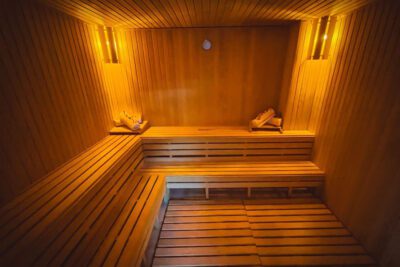
A performance-grade sauna distributes heat evenly across the entire interior, allowing the user to relax into the session and sustain exposure long enough for physiological benefits to take effect. Barrel saunas, by contrast, often force users to tolerate swinging temperatures rather than experience a smooth, even rise in core body heat.
Material expansion reduces longevity and stability
Because barrel saunas rely on curved timber bands held under tension, the structure expands and contracts with moisture and temperature. Over time, this movement increases gaps, reduces structural tightness and introduces additional heat loss. Small shifts in alignment can create air leaks that let warm air escape and cold air enter, demanding more from the heater and reducing efficiency.
Flat-panel, insulated saunas — especially those engineered under controlled indoor conditions — maintain their structural integrity for decades. In contrast, the nature of a barrel sauna means it is constantly fighting against its own geometry.
Heaters work harder, deliver less
A heater performs best when operating in a controlled thermal environment. Barrel saunas create the opposite. Heat escapes quickly, the temperature fluctuates and the heater must work harder to compensate. This reduces energy efficiency, shortens heater lifespan and still fails to deliver the deep, stable heat needed for muscle recovery, cardiovascular conditioning or stress adaptation.
With electric heaters designed to produce predictable, high-output heat, stability matters. Without it, the physiological benefits of sauna — particularly consistent core temperature elevation — are diminished.
The UK climate exposes barrel limitations
Barrel saunas might perform better in warm, dry regions, but the UK’s moisture, rain and cold reveal the weaknesses fast. Thin timber absorbs water, swells, shrinks and develops gaps, while the curved form sheds water inconsistently. As moisture meets repeated heat cycles, longevity suffers and performance declines.
A sauna built for British weather needs structural rigidity, insulation depth and material stability — qualities that curved barrel designs struggle to provide.
Why heat consistency matters more than atmosphere
People often choose barrel saunas for their aesthetic or nostalgic appeal. But the benefits of sauna come from sustained, consistent exposure to performance-grade heat. If the temperature is unstable, uneven or constantly dropping, the body does not reach the thermal threshold required for meaningful adaptation. A session becomes more about managing discomfort than gaining physiological benefit.
True North’s philosophy is simple: get the fundamentals right. Consistent heat. Stable structure. Durable materials. Performance engineering. A sauna should perform like a tool, not behave like a novelty.
How True North approaches heat performance
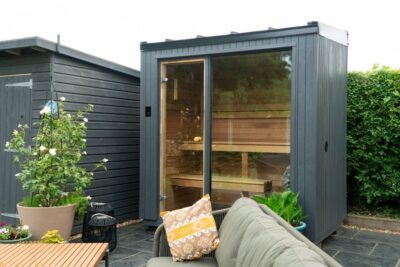
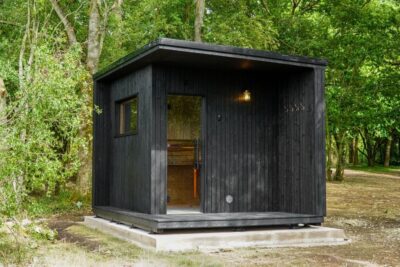
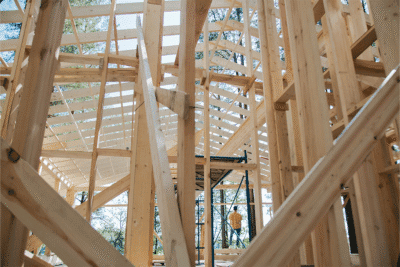
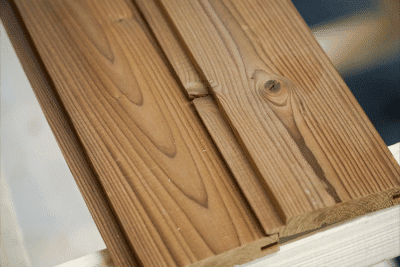
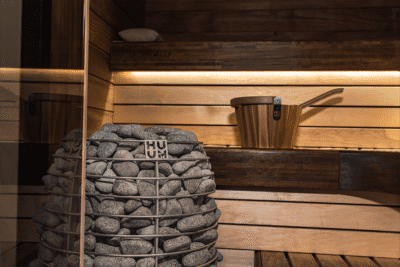
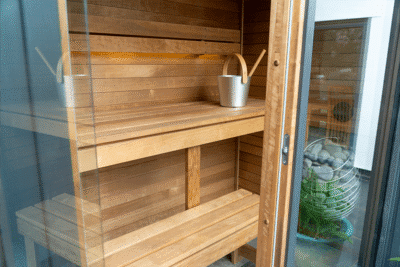
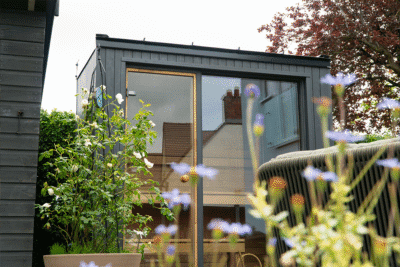
True North saunas are precision-built with flat-panel construction, controlled insulation, thermally stable timber and high-performance electric heaters. The structure is designed to trap heat, distribute it evenly and maintain thermal stability even in cold, wet UK conditions. This creates a predictable environment where every session supports recovery, resilience and wellbeing.
The result is the opposite of the typical barrel experience. You step into a chamber where the temperature holds steady, the air feels dense and even, and the entire environment works with your body — not against it.
Most barrel saunas struggle to maintain performance-grade heat because their design limits insulation, creates uneven temperature distribution, and loses heat through curved surfaces and expanding timber. While they offer charm and simplicity, they cannot compete with a precision-engineered sauna designed for consistent thermal performance.
If your goal is measurable recovery, stress reduction and long-term resilience, heat consistency is non-negotiable. True North saunas deliver the stability and durability needed to turn heat exposure into a reliable, science-backed part of everyday performance.