Blog
A complete outdoor sauna buying guide for the UK

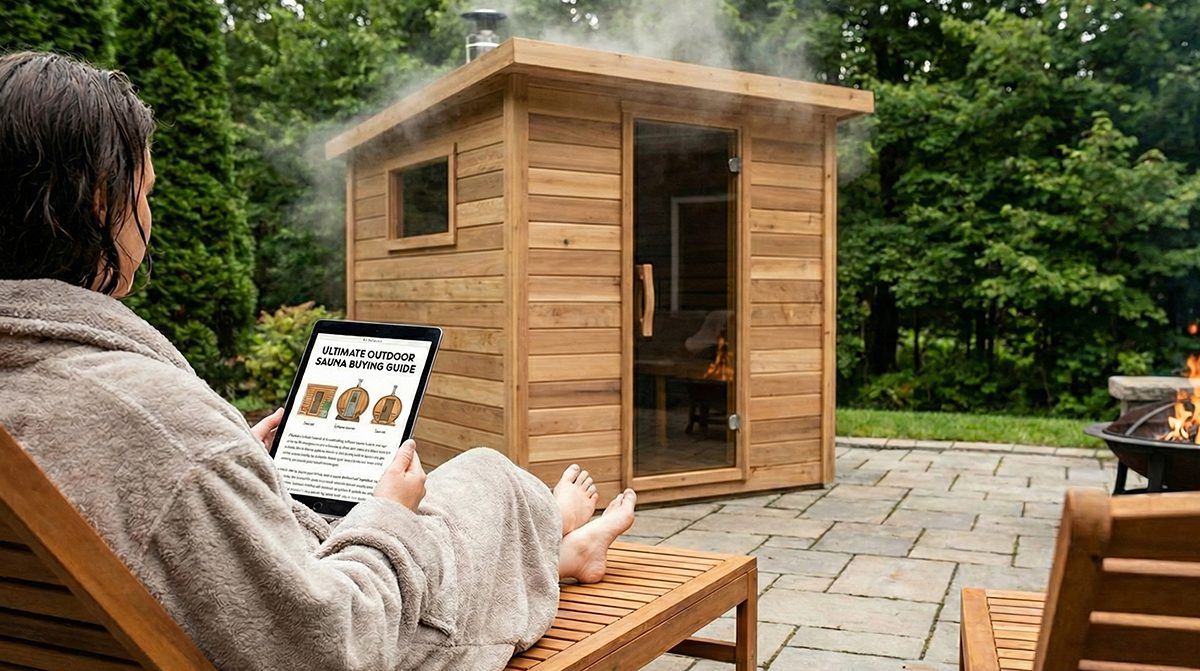
An outdoor sauna is one of the most effective ways to elevate your home environment and support better recovery, sleep and overall wellbeing. For many people, the idea does not start with curiosity but with experience. They have already felt the benefits of heat exposure in a gym or spa and want to bring that into their daily routine in a way that is reliable, consistent and built for long-term use.
The difference between a sauna that performs comfortably throughout the year and one that struggles to hold heat often comes down to details that are not always visible at first glance. This guide explains what defines a performance-grade outdoor sauna, how it differs from an indoor unit, and what matters most when you are considering one for your home.
What is an outdoor sauna?
A performance outdoor sauna is a dedicated structure designed to create a controlled heat environment outside the home. Unlike an indoor sauna, it sits in the garden, exposed to seasonal changes, moisture and temperature swings. Because of this, its construction has to do more than simply contain heat. It has to create an internal environment where temperatures between seventy five and one hundred degrees Celsius can be reached and maintained comfortably, regardless of what is happening outside.
This requires the structure to be properly insulated, sealed and built from materials that remain stable under repeated heating and cooling cycles. It also needs a heater that is powerful enough to offset cold external air in winter and bring the internal temperature up to the desired range within a sensible timeframe. When these elements are designed and executed well, the experience inside an outdoor sauna feels very similar to what you would expect from a high quality commercial sauna, only with the benefit of being available whenever you choose to use it.
How outdoor saunas differ from indoor and commercial saunas
Indoor and commercial saunas benefit from being placed within controlled environments. Their walls are not exposed to weather, and the temperature surrounding the structure is relatively stable throughout the year. This means that the heater has less work to do and the structure experiences far less movement and moisture stress. An outdoor sauna does not have these advantages, so its materials and construction must account for external conditions from the outset.
The structure must handle wind, rain and colder temperatures without allowing heat to escape too quickly. It also needs to tolerate the natural expansion and contraction that comes from heating the interior while the exterior remains cold. Over time, this can affect untreated or thin timber, sealant points and joints if the sauna is not built with the right materials. A performance-grade outdoor sauna is therefore designed with a stronger thermal envelope, more robust detailing and more stable internal timber than you would normally see in an indoor unit. The goal is to create the same quality of heat and comfort, but within a structure built for the demands of outdoor use.
What makes a performance-grade outdoor sauna?
A high performing outdoor sauna is based on a series of practical principles that work together to create consistent heat and long-term reliability. These principles form the foundation of how the sauna feels to use and how well it holds up over time.
A good outdoor sauna should be able to reach traditional Finnish temperatures and maintain them without large fluctuations. For this to happen, the heater must be matched to the internal volume of the sauna and the quality of its insulation. When these elements are aligned, the sauna warms up efficiently and holds its heat without the heater working unnecessarily hard.
The structure itself must support this environment. Insulation in the walls and ceiling keeps heat in, while a continuous vapour barrier prevents moisture from entering the insulation or timber layers. Thermo-treated timber is used inside the sauna because it remains stable during repeated heating and cooling cycles and is better suited to the moisture and temperature changes of an outdoor environment. A well-designed ventilation path completes the environment by allowing fresh air to enter and warm, humid air to leave. When all these components work together, the sauna feels comfortable, steady and predictable.
The engineering behind reliable heat
Heat performance is the heart of any sauna. In an outdoor setting, achieving reliable heat requires thoughtful engineering rather than higher temperatures. The heater plays a central role in this. Its output must be sufficient to raise the internal temperature of the sauna and keep it there throughout your session. For example, a sauna with an internal volume of around twenty cubic metres and appropriate insulation typically requires a heater of approximately nine kilowatts. With the correct heater in place, the sauna should reach full temperature within thirty five to fifty minutes depending on weather conditions.
The structure around the heater must support this performance. Insulation reduces heat loss and contributes to lower running costs. The vapour barrier prevents moisture from moving into the insulation or timber, which helps protect the structure and maintain internal heat. Thermo-treated timber provides stability because it is less prone to changes in dimension when exposed to heat and humidity. Together, these features create an internal environment where the air feels clean, even and consistent during use.
Heat retention is also influenced by the quality of the thermal envelope. A well-built sauna typically loses only a few degrees during active use, which makes sessions more comfortable and reduces the strain on the heater. This stability becomes especially noticeable in winter, when outdoor temperatures drop and thin-walled saunas struggle to maintain a comfortable heat. With proper materials and construction, a performance outdoor sauna feels the same in January as it does in July.
Timber, insulation and moisture control
The materials used in an outdoor sauna directly influence its performance. Thermo-treated timber is widely used for interior cladding because it remains stable when exposed to repeated high temperatures. It resists warping, shrinking and swelling, all of which can affect the feel and safety of the space. For the external structure, durable cladding and proper timber treatment help the sauna withstand moisture, wind and seasonal shifts.
Insulation is equally important. It should be present throughout the walls and ceiling to keep heat inside the sauna and make the heater’s job more efficient. Better insulation leads to faster heat-up times, more stable temperatures and improved energy use. A continuous vapour barrier sits behind the cladding and insulation to prevent moisture from moving through the structure. This barrier is essential in an outdoor sauna because it protects the insulation from water ingress and keeps the internal timber layers dry.
Airflow, ventilation and interior layout
Ventilation supports comfort and safety within the sauna. A designed airflow path ensures that fresh air can enter the sauna while moisture and humid air can leave. This flow helps maintain oxygen levels and prevents the air from feeling heavy. It also reduces the risk of moisture accumulating within the structure.
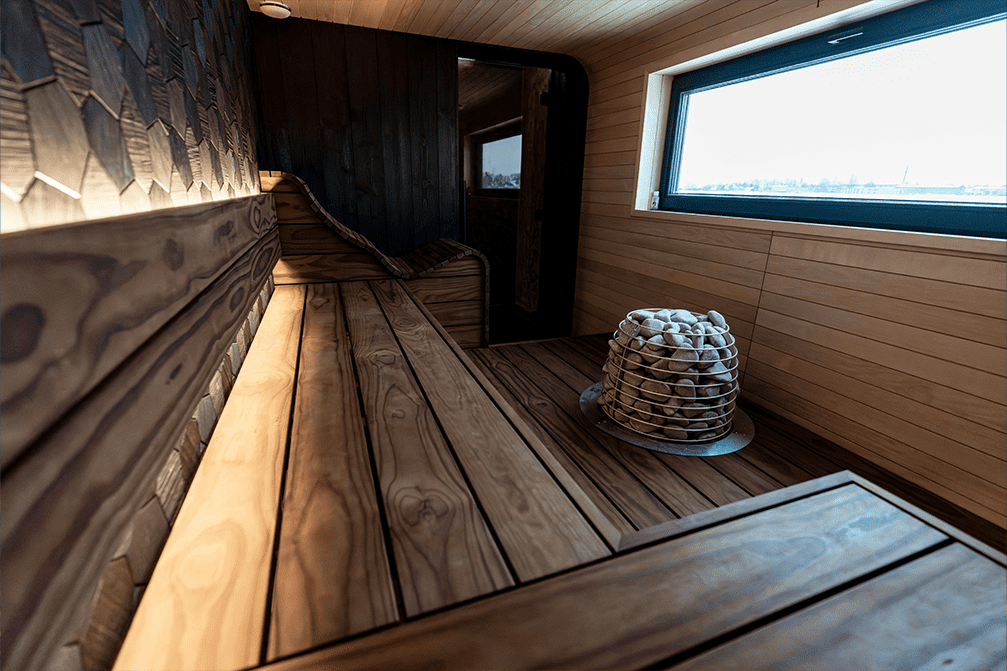
Interior layout plays an important role in the heat experience. Bench height determines the temperature you feel because heat rises. A well-designed layout positions the upper bench in the warmest part of the air column while providing enough space to sit comfortably or lie down. The placement of the heater and the door also influence how heat circulates and how the sauna feels during use.
Why people choose outdoor saunas for long-term wellbeing
Many people choose an outdoor sauna because they want access to the benefits of heat exposure without relying on gyms, spas or inconsistent schedules. The real value comes from having a space at home that is always ready, always predictable and designed for regular use. With that consistency, the effects of heat become easier to feel and sustain.
One of the most recognised benefits is improved recovery. Heat causes blood vessels to widen, which increases circulation and encourages more oxygen-rich blood to reach muscles after training. This can help with general mobility, reduce post-exercise stiffness and support the recovery process between sessions. Regular heat exposure is also linked with improved cardiovascular conditioning because the rise in heart rate places a gentle but meaningful demand on the cardiovascular system.
Outdoor saunas also play a role in sleep quality. Using the sauna in the evening raises core body temperature, and as the body cools afterwards, it naturally prepares for rest. Many people find this warm-to-cool transition helps them fall asleep more easily and creates a deeper, more restorative sleep cycle. Having a sauna at home makes it possible to build this into a routine rather than relying on occasional access elsewhere.
Stress resilience is another benefit often associated with sauna use. Heat exposure is a controlled stressor. As the body adapts to this environment over time, it becomes more capable of handling pressure in everyday life. People who use saunas regularly frequently describe a sense of calm that follows each session. This is due in part to the release of endorphins and the settling effect of stepping from a warm environment into cooler air.
There is also a mental aspect that is hard to replicate elsewhere. Sauna sessions create a clear break in the day. They offer time away from screens and noise, and the contrast between heat and fresh air has a noticeable effect on mental clarity. For many, this becomes one of the most enjoyable parts of the experience. It is not dramatic or overstated. It is simply the result of giving the mind space to unwind while the body adapts to the heat.
When these benefits are combined and repeated over weeks and months, they support a more consistent sense of wellbeing. A well-built outdoor sauna makes this level of regularity possible because it performs the same way every time you use it, regardless of the season.
Key decisions when selecting an outdoor sauna
Selecting an outdoor sauna is a practical process. The first consideration is size. Think about how many people will use the sauna regularly and whether you prefer to sit or lie down. This will influence both the internal dimensions and the bench configuration.
The heater is another key decision. It should be sized to match the internal volume so that the sauna can reach and maintain the correct temperature range. A correctly sized heater improves both comfort and energy efficiency.
Timber and materials are also important. Look for thermo-treated interior timber, durable cladding for the exterior and a strong structural frame. These choices influence how the sauna feels inside and how well it holds up outdoors.
Finally, consider the sauna’s location within your garden. Think about privacy, access for installation, distance to the house and proximity to electrics. These factors will help make the installation smoother and the sauna more enjoyable to use.
Running costs, groundwork and installation
Running costs are typically straightforward. A standard eight to ten kilowatt heater usually costs between £1.20 – £2.80 per session depending on your energy tariff and how long you use the sauna.
The groundwork should provide a stable, level base. Many people choose concrete pads, stone bases or composite frames. For electrics, a thirty two amp supply is usually required, and the cable should be armoured and installed by a qualified electrician.
Most outdoor saunas are delivered in panels and assembled on site. Once the groundwork and electrics are prepared, installation usually takes one to two days.
Maintenance and lifespan
A well-built outdoor sauna is designed to last for decades with straightforward maintenance. External timber should be treated periodically to protect it from weather. Heater stones may need replacing every one to two years depending on usage. Seals, joints and ventilation paths should be checked occasionally to ensure everything remains in good condition.
With proper materials, treatment and ventilation, a performance-grade outdoor sauna remains stable, comfortable and efficient for many years.
Frequently asked questions
Yes. A well-insulated outdoor sauna with a heater matched to its internal volume performs reliably year-round.
In many cases no, although certain locations, property types or installations may require approval. Checking your specific situation is always recommended.
With thermo-treated timber, proper insulation and routine maintenance, a high-quality outdoor sauna can last well over twenty years.
A performance-grade outdoor sauna typically reaches full temperature in thirty five to fifty minutes depending on the weather.
Most homes with a garden can accommodate a two to four person sauna. Placement and access often matter more than overall garden size.
Infrared saunas heat the body directly, while traditional saunas heat the air. Both have benefits, although they offer different experiences and outcomes.
Is an outdoor sauna right for you?
An outdoor sauna can be a valuable addition if you want a dedicated environment for recovery, relaxation and long-term wellbeing. The benefits come from consistency, which is easier to achieve when the sauna is at home and available whenever you choose to use it.
Performance depends on construction quality, the right heater and stable materials. When these elements are in place, an outdoor sauna becomes a reliable part of your routine and a meaningful upgrade to your home environment.
If you would like guidance on what is possible in your space and which specification suits your needs, our team can help you explore the options.