Blog
Do you need planning permission for an outdoor sauna in the UK?

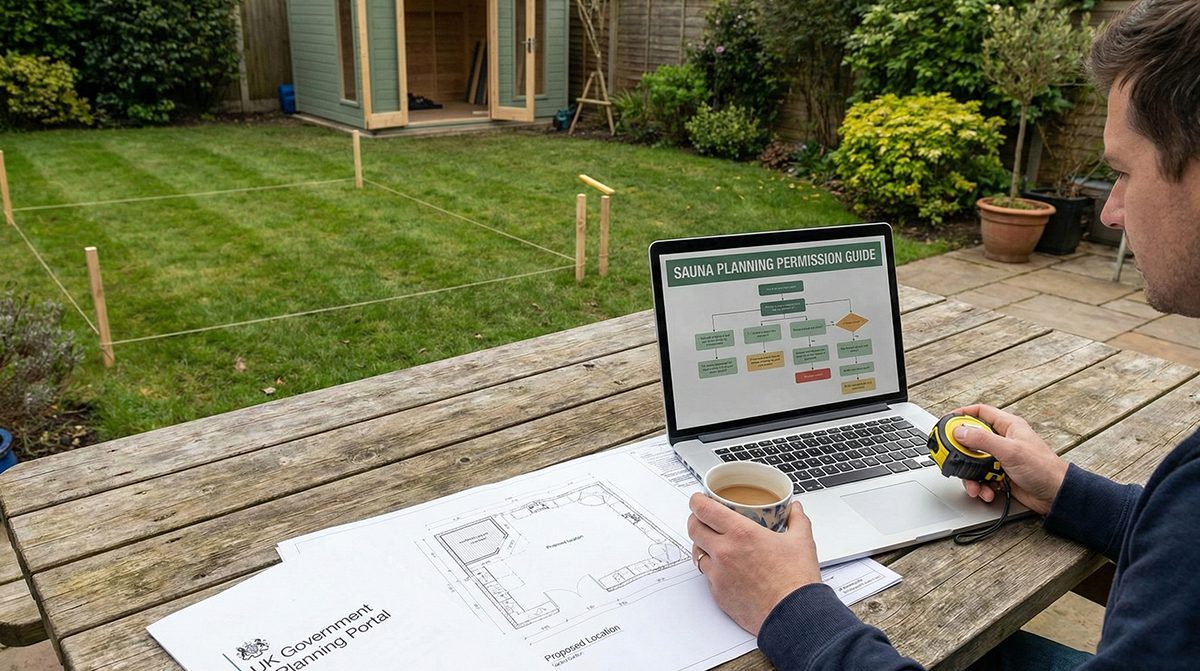
Adding an outdoor sauna to your home can be a straightforward process, but one of the first questions people ask is whether planning permission is required. The answer is often simple, although there are certain rules and exceptions that are worth understanding before you begin.
This guide explains the typical planning regulations for outdoor saunas in the UK, what determines whether permission is needed, and how to make sure your installation goes ahead smoothly.
Understanding how planning rules apply to garden structures
In the UK, most outdoor saunas fall under a category known as Permitted Development. This refers to structures that homeowners can add to their property without applying for full planning permission, as long as specific criteria are met. Outdoor saunas are usually treated in the same way as other outbuildings such as garden rooms, home offices or studios.
Whether a sauna qualifies as Permitted Development comes down to a few practical points. These include where the structure is positioned, how tall it is, how close it sits to property boundaries and whether your home is subject to additional planning controls. When these factors fall within the guidelines, the process is usually straightforward. When they do not, a planning application may be required.
Height limits and how they affect outdoor saunas
Height is one of the most important considerations because it determines whether a sauna can be built under Permitted Development.
For most properties in England, the following applies:
- An outbuilding with a dual pitched roof can be up to four metres high.
- An outbuilding with any other roof type can be up to three metres high.
- If the structure is placed within two metres of any boundary, the height limit is reduced to 2.5 metres.
Most outdoor saunas designed for home use fall within these limits, especially when they are positioned a reasonable distance away from fences or neighbouring properties. The height of the sauna should be confirmed before installation to ensure it fits these criteria. If the sauna exceeds the height restrictions, planning permission may be required regardless of where it is placed.
Where the sauna is positioned within your garden
Placement affects both the height limit and whether the structure is considered suitable under Permitted Development. The sauna should sit within the property’s curtilage, which refers to the land immediately surrounding the home. This includes your garden but does not include fields, paddocks or adjoining land that is not considered part of the domestic boundary.
A sauna should not be placed forward of the principal elevation of your home. In practical terms, this means it should be located to the side or rear of the house rather than at the front. Most installations naturally fall within this guideline because saunas benefit from privacy and are typically positioned in quieter areas of the garden.
Restrictions that apply to certain types of properties
There are circumstances where Permitted Development does not apply. In these cases, planning permission may be needed even if the sauna meets the usual height and placement criteria.
This applies to:
- Listed buildings
- Homes in designated conservation areas
- National parks
- Areas of outstanding natural beauty
- World Heritage Sites
If your property falls into one of these categories, planning rules are more specific and sometimes more restrictive. Some homeowners in these areas still receive approval for garden saunas, but the process involves submitting an application that considers design, materials and visual impact. If you are unsure, a quick check with your local planning authority provides clarity.
Using an outdoor sauna for business or accommodation
Planning permission is also likely to be required if the sauna is not being used solely as part of the home. If it forms part of a business, provides accommodation or attracts regular customer or guest visits, it may be considered a change of use. This usually triggers planning oversight to ensure suitability and compliance with local regulations.
For personal use within a private garden, these concerns normally do not apply.
How the size and design of the sauna influence planning requirements
The footprint of the sauna can influence planning rules when it occupies a significant portion of the garden. Under Permitted Development, outbuildings must not cover more than fifty percent of the total area of land around the original house. For most households, an outdoor sauna represents a small fraction of the available space, so this rule is seldom an issue. It becomes more relevant for larger structures or gardens with multiple outbuildings.
The materials used for the exterior can also play a role if the sauna is being installed in an area with design controls. For example, some conservation areas require outbuildings to be constructed from specific materials to maintain visual consistency. In most cases, timber-clad saunas complement natural surroundings and sit comfortably within these guidelines.
Practical steps before installing an outdoor sauna
Even when a sauna qualifies as Permitted Development, it is still worth reviewing a few practical considerations. Checking boundary distances, confirming the height of the structure and making sure the chosen location does not obstruct neighbours’ views or light can help avoid discussions later on. Preparing the correct groundwork and ensuring suitable electrical provision also supports a smooth installation.
Many homeowners find it helpful to contact their local planning authority for reassurance, even when permission is not required. A brief phone call or online enquiry is often enough to confirm that the plans fall within the rules. This step provides confidence and ensures there are no surprises once the build begins.
When planning permission is not usually required
In most cases, you will not need planning permission for an outdoor sauna if all of the following are true:
- The sauna is placed in the rear or side garden.
- It does not sit forward of the home’s main elevation.
- The height is below the maximum limit for its position.
- It is used for personal, domestic purposes.
- It does not take up more than half of the garden space.
- The property is not restricted by special planning controls.
These criteria reflect common planning guidance across the UK, although wording and interpretation can vary between local authorities.
When to speak with your local planning authority
Although most homeowners do not need planning permission for an outdoor sauna, it is sensible to seek confirmation in the following situations:
- Your property is listed or in a conservation area.
- The sauna is close to a boundary.
- The height of the structure is close to the 2.5 metre limit.
- You plan to include additional features such as showers or seating areas.
- You are unsure whether your garden is part of the domestic curtilage.
Local planning teams are used to dealing with enquiries about outbuildings and often respond quickly with clear guidance.
For the majority of UK homeowners, an outdoor sauna can be installed without planning permission when it fits within Permitted Development rules. Height, placement and property type are the primary considerations. Once these are understood, the process is usually simple, and most installations move forward without issue.
If you ever feel unsure, your local planning authority can provide clarity. A short conversation can confirm what applies in your area and help you make confident decisions.