Blog
Electric vs wood-fired saunas for heat performance


Sauna heat is one of the simplest and most effective tools for recovery, resilience, and cardiovascular health. But not all saunas perform equally. Choosing between an electric or wood-fired sauna is more than a matter of preference or tradition; it is a decision that affects how efficiently your body responds to heat therapy.
At True North, we engineer saunas to deliver consistent, high-performance heat. Understanding the differences between electric and wood-fired systems ensures you select a sauna that maximises recovery and adaptation.
What defines heat performance?
When evaluating saunas, heat performance comes down to measurable factors: how quickly the sauna reaches temperature, how stable the heat is, how humidity is controlled, and how efficiently energy is converted into usable heat. The goal is not ambience or ritual; it is predictable, repeatable heat exposure that drives real physiological benefits.
Wood-fired saunas: strengths and limitations
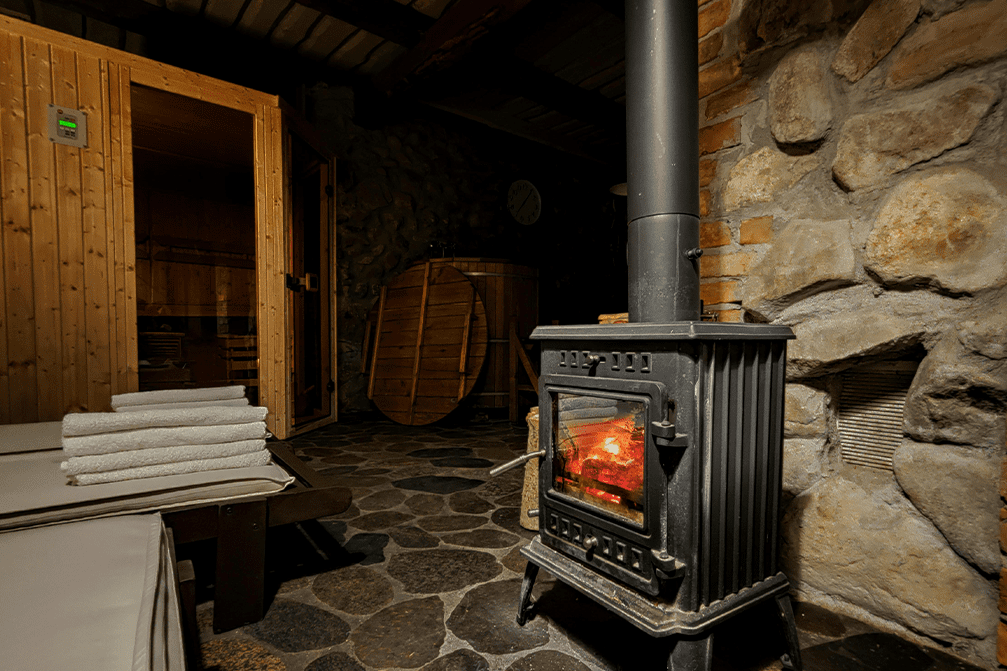
Wood-fired saunas are traditional and can reach very high temperatures. The experience is unique, and for some people, it carries nostalgic appeal. They are also suitable in locations without reliable electricity.
However, wood-fired saunas have inherent limitations. Heat-up times are long, often between 45 and 90 minutes, and the temperature fluctuates depending on the fire’s intensity. Controlling humidity is imprecise, relying on how hot the stones are and how the fire burns. Maintenance is significant, including ash disposal, chimney cleaning, and firewood storage. For people seeking consistent, daily heat exposure, these variables reduce efficiency and reliability.
Electric saunas: consistency and control
Electric heaters exist to deliver predictable, high-output heat. Modern systems, like the HUUM units used in True North saunas, reach optimal temperatures in 30–45 minutes, regardless of external conditions. Temperature is stable and controllable, and humidity can be adjusted with water on the stones, creating the exact heat environment needed for effective adaptation.
Electric saunas convert energy efficiently, require minimal maintenance, and provide repeatable conditions for every session. This predictability ensures that heat exposure is consistent, making each session reliable for recovery, cardiovascular benefits, and resilience.
Comparing heat-up times and temperature stability
Wood-fired saunas can produce strong heat, but reaching the desired temperature takes time and effort. The user must manage the fire, which causes peaks and drops in temperature. Electric saunas heat quickly and maintain steady temperatures, which is critical because physiological benefits correlate with time spent at consistent, optimal temperatures.
Humidity is also more predictable with electric systems. Adding water to the stones increases steam in a controlled way, whereas wood-fired humidity is less predictable, fluctuating with fire intensity.
Maintenance and usability
Another factor affecting performance is the effort required to operate the sauna. Wood-fired saunas demand constant attention: tending the fire, managing logs, and cleaning ash and chimneys. Electric saunas remove this friction. They deliver heat on demand, allowing users to focus on the session itself rather than preparation or upkeep.
This reliability is essential for people who use saunas as part of a performance-focused routine, where consistency compounds results.
Why True North uses electric heat
True North saunas are designed for precision, efficiency, and longevity. HUUM heaters produce dense, even heat that maintains temperature throughout the session. Thermo-treated timber ensures the sauna chamber remains stable under repeated high temperatures, and fully built, pre-delivered units remove installation variables.
The outcome is a sauna that performs the same way every session, allowing the user to track progress, optimise recovery, and build resilience.
The verdict on heat performance
If your goal is predictable, repeatable, and high-output heat that maximises adaptation, electric saunas outperform wood-fired saunas in nearly every measurable metric. Wood-fired saunas offer tradition and atmosphere, but electric saunas provide control, efficiency, and consistency—the variables that truly drive results.
Choosing an electric sauna is not about convenience; it is about engineering your environment for measurable physiological benefit.
Heat performance is the defining factor in effective sauna use. While wood-fired saunas can reach high temperatures, electric saunas deliver consistent heat, controlled humidity, and reliable energy efficiency. For anyone serious about recovery, cardiovascular health, and resilience, electric saunas are the tool that transforms heat exposure into performance.
A True North electric sauna ensures every session contributes to measurable adaptation, removing guesswork and friction from your recovery routine.