Blog
Infrared vs traditional sauna: Performance, heat and results

Infrared saunas have become increasingly popular, often marketed as a faster, gentler alternative to traditional saunas. At the same time, traditional heat-based saunas remain the standard in athletic, recovery and wellness environments worldwide. Understanding the differences between these two approaches requires looking beyond surface comfort and into how the body responds to heat.
Comparing infrared and traditional saunas through the lens of heat delivery, physiological response and long-term results helps clarify which approach supports meaningful adaptation.
Compare infrared and traditional saunas for heat depth, performance and results, and which delivers true sauna benefits.
What defines a traditional sauna
A traditional sauna heats the air within a sealed chamber, raising internal temperatures typically between 75°C and 100°C. The heat warms the skin, muscles and core body temperature through convection and radiation from hot surfaces.
This rise in core temperature triggers a cardiovascular response similar to moderate exercise. Heart rate increases, blood vessels dilate and sweating intensifies. These responses form the foundation of sauna’s well-documented benefits, including improved circulation, stress regulation and recovery.
How infrared saunas heat the body
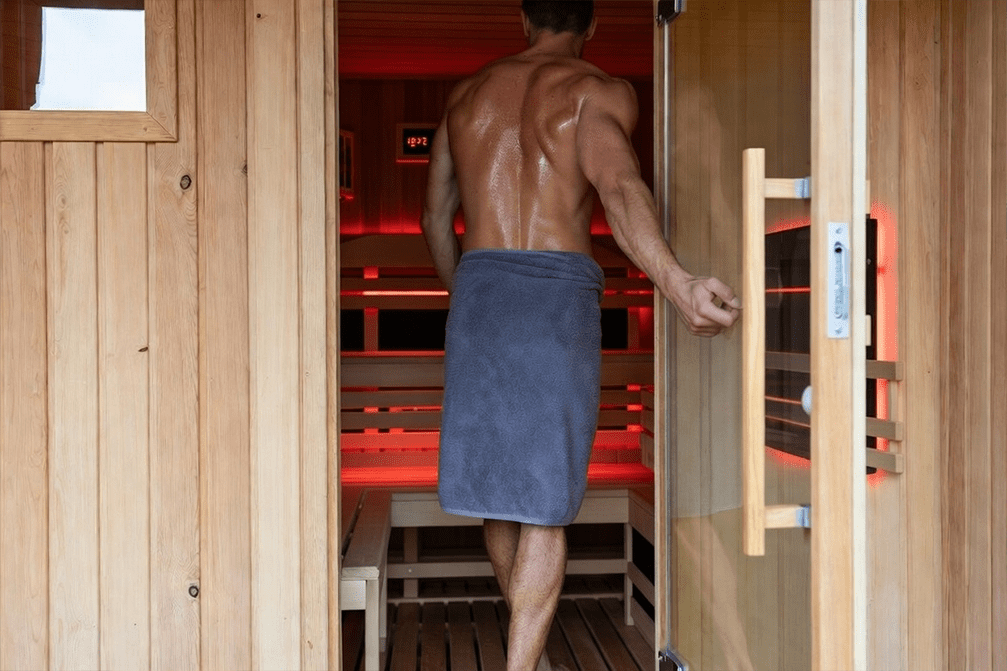
Infrared saunas operate at much lower air temperatures, usually between 40°C and 60°C. Instead of heating the air, infrared panels emit radiation that warms the skin directly.
Because the surrounding air remains relatively cool, infrared saunas can feel more tolerable for some users. However, the lower overall heat load means the body’s core temperature rises more slowly and often to a lesser degree.
This difference in thermal stress is central to the performance gap between the two approaches.
Heat and physiological response
Infrared saunas are often described as providing “deep heat penetration.” In reality, the depth of heating depends on tissue temperature, blood flow and exposure time. While infrared radiation does warm the skin, traditional saunas raise core temperature more effectively by heating the entire environment.
A higher core temperature produces stronger cardiovascular and hormonal responses. Sweating increases, circulation improves and heat shock proteins are activated. These mechanisms underpin many of the recovery and resilience benefits associated with sauna use.
Traditional saunas create a whole-body thermal stimulus. Infrared saunas provide a more localised, lower-intensity heat exposure.
Performance and consistency
Consistency matters in any recovery or adaptation process. Traditional saunas offer a predictable environment where temperature, humidity and airflow can be controlled precisely. This allows the body to adapt to repeated sessions in a stable way.
Infrared saunas are more sensitive to panel placement, distance from the body and exposure time. Heat distribution can vary significantly within the cabin, leading to less consistent sessions.
For users seeking reliable, repeatable outcomes, environmental consistency is a key advantage of traditional saunas.
Recovery and stress regulation
Both infrared and traditional saunas can promote relaxation, but they do so through different mechanisms. Infrared’s lower heat may feel calming and accessible, particularly for beginners. However, the stronger parasympathetic rebound seen after traditional sauna use is linked to the greater thermal load placed on the body.
Traditional sauna sessions more reliably trigger nervous system recovery, improved sleep and stress resilience when used consistently. The depth of the response reflects the intensity of the stimulus.
Adaptation over time
The body adapts to repeated heat exposure. Traditional sauna use improves heat tolerance, cardiovascular efficiency and recovery capacity over time. These adaptations require sufficient thermal stress to stimulate change.
Infrared sauna sessions may feel beneficial in the short term, but the lower temperatures limit the degree of long-term adaptation. For those using a sauna as a performance or recovery tool rather than a relaxation aid, this difference matters.
Energy use and session experience
Infrared saunas consume less energy and heat up quickly, which can make them appealing for occasional use. Traditional saunas require more energy but deliver a more immersive experience, with higher temperatures and greater humidity control.
The experience of being fully enveloped by heat contributes to the mental and physical benefits of traditional sauna use. It is this immersion that many users associate with clarity, calm and recovery.
Why True North builds traditional performance saunas
True North focuses on traditional sauna design because it delivers consistent, whole-body heat that produces reliable physiological results. Our saunas are engineered to maintain stable temperatures, distribute heat evenly and support frequent use in demanding conditions.
By prioritising insulation, structure and electric heating precision, we create environments that allow the body to respond fully to heat exposure. This approach aligns with long-term performance, recovery and resilience rather than short-term comfort.
Infrared and traditional saunas offer different experiences, but they are not equivalent in performance. Infrared saunas provide lower-intensity, localised heat that may suit occasional or introductory use. Traditional saunas deliver whole-body thermal stress that supports cardiovascular conditioning, recovery and long-term adaptation.
For those seeking measurable results, consistency and depth of heat matter. Traditional saunas provide the environment required for meaningful physiological change. True North saunas are built to deliver that standard, session after session.