Blog
What your garden needs before you install a sauna

Installing an outdoor sauna is often seen as the final step in the buying process. You choose a design, decide on the specifications and start looking forward to your first session. In reality, some of the most important decisions happen before the sauna ever arrives.
The environment surrounding the sauna has a direct impact on how well it performs, how long it lasts and how enjoyable it is to use. A well-prepared garden allows the sauna to function exactly as intended from day one. Heat is retained efficiently, installation runs smoothly and the structure remains stable for years to come. By contrast, overlooking key site requirements can create problems that are difficult and expensive to correct later.
The good news is that most gardens are perfectly capable of accommodating a sauna. The key is understanding what the space needs before installation begins.
A stable foundation is essential
Every successful sauna installation starts with a suitable base.
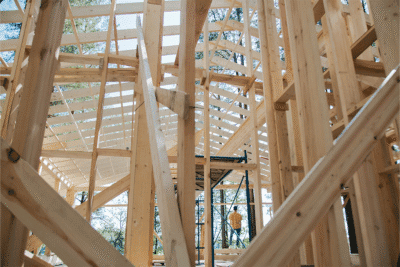
An outdoor sauna is a substantial structure that experiences constant changes in temperature, moisture and load throughout its lifespan. As the sauna heats and cools, materials naturally expand and contract. To perform properly, the structure needs a foundation that remains stable throughout these cycles.
An uneven or poorly prepared base can lead to issues that only become apparent over time. Doors may become difficult to close correctly, panels can fall out of alignment and gaps may develop that affect heat retention. What starts as a small imperfection can gradually influence the overall performance of the sauna.
The ideal solution will vary depending on the site. Concrete bases are common, but reinforced paving systems, ground screws and other engineered solutions can also work effectively when designed correctly. The important factor is not the specific material but the stability, levelness and load-bearing capacity of the foundation.
Investing time in the base is rarely the most exciting part of the project, but it is one of the most important.
Drainage deserves more attention than most people give it
The UK climate places unique demands on outdoor structures.
Even in relatively dry regions, outdoor saunas are exposed to significant levels of rainfall throughout the year. If water is allowed to collect around the base of the structure, it can increase moisture exposure and place unnecessary stress on surrounding materials.
Good drainage ensures that rainwater moves away from the sauna rather than accumulating beneath it. This may involve creating a slight gradient around the installation area, incorporating permeable materials into the surrounding landscape or introducing dedicated drainage measures where required.
Proper drainage not only protects the sauna itself but also improves the usability of the surrounding area. Nobody wants to step out of a sauna into standing water or permanently muddy ground.
When evaluating a potential location, it is worth considering how the area behaves after prolonged periods of rain. The answer often reveals more than a dry-weather inspection ever will.
Planning the electrical supply early saves problems later
For most outdoor saunas, the electrical supply is one of the most important practical considerations.
Modern electric sauna heaters require dedicated power supplies that are designed to match the output of the chosen heater. This is often more involved than simply running power from an existing outdoor socket. Cable routes, circuit protection and overall electrical capacity all need to be considered carefully.
The distance between the house and the sauna can also influence installation requirements. Longer cable runs may affect costs and may require additional planning during the design stage.
Discussing electrical requirements early in the process helps avoid delays and ensures that everything is ready when the sauna is installed. It also allows electricians to coordinate their work alongside any groundwork or landscaping that may be taking place.
Access matters more than you think
One of the most common challenges during installation has nothing to do with the sauna itself.
It is getting the sauna into position.
Depending on the design, outdoor saunas may arrive as pre-built panels, modular sections or larger structural components that need to be moved through the garden. Access routes therefore need to be considered well before delivery day.
Narrow pathways, tight corners, retaining walls and restricted side access can all influence installation logistics. In some cases, seemingly minor obstacles can significantly increase complexity.
A site that appears suitable on paper may present challenges once physical installation begins. This is why professional site assessments are often invaluable. Identifying access constraints early allows solutions to be planned in advance rather than discovered at the last minute.
Think beyond the footprint of the sauna
Many people focus entirely on the dimensions of the sauna itself.
In practice, the space around the structure is just as important.
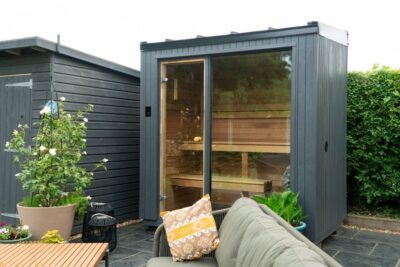
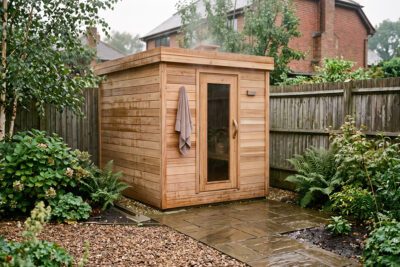
Leaving sufficient room around the sauna improves airflow, makes future maintenance easier and creates a more comfortable environment overall. It also prevents the structure from feeling squeezed into the garden, allowing it to sit more naturally within the wider landscape.
The surrounding space also influences how the sauna is experienced. Whether that involves a simple seating area, an outdoor shower or a dedicated cooling zone, giving thought to the immediate environment often transforms how the sauna is used.
A sauna should feel integrated into the space around it rather than simply occupying a spare corner of the garden.
Shelter improves performance
Outdoor saunas are designed to withstand the elements, but that does not mean exposure should be ignored.
Wind, in particular, can have a noticeable effect on performance. Highly exposed locations experience greater heat loss and place increased demands on the heating system, especially during winter. While a quality sauna will still perform effectively, positioning it in a more sheltered location often improves efficiency and comfort.
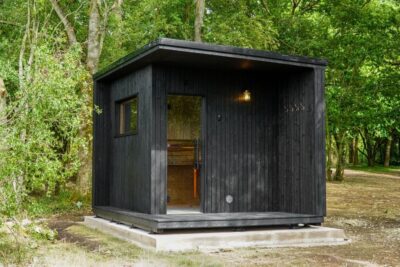
Existing landscape features such as walls, fences and hedges can provide valuable protection without compromising the outdoor experience. The goal is not to hide the sauna away but to avoid placing it in a position where it is constantly battling the weather.
Careful positioning helps create a more consistent sauna environment throughout the year.
Privacy should be part of the plan
Privacy is often overlooked until after installation.
Yet for many owners, it becomes one of the most important factors influencing how comfortable the sauna feels to use.
A sauna is naturally a place for relaxation, recovery and uninterrupted time away from daily demands. If the structure is directly overlooked by neighbouring properties or highly visible from surrounding areas, it can affect the overall experience.
Fortunately, creating privacy does not necessarily require major landscaping. Thoughtful positioning, strategic planting and careful orientation can often provide all the separation that is needed.
The objective is not complete isolation. It is simply creating a space where users can feel comfortable and fully switch off.
Create space for cooling and recovery
A sauna session does not end when you step outside.
Cooling down is a valuable part of the process, whether that involves sitting in the fresh air, using a cold shower or simply allowing your body temperature to return to normal naturally.
For this reason, it is worth thinking about how the surrounding space will be used before installation begins. Even a modest seating area or sheltered outdoor space can significantly improve the overall experience.
The most successful sauna installations consider the entire journey, not just the time spent inside the heat.
Why preparation pays off
Many of the factors discussed above are largely invisible once the sauna is installed.
Visitors are unlikely to notice the drainage system beneath the structure or the planning that went into positioning the electrical supply. Yet these details often have the biggest influence on long-term performance.
A properly prepared site allows the sauna to function efficiently, remain structurally stable and integrate naturally into everyday life. It reduces future maintenance requirements, improves reliability and helps ensure the investment delivers value for years to come.
In many ways, the preparation work determines the quality of the ownership experience long before the first sauna session takes place.
How True North approaches installation
At True North, we believe a great sauna installation starts well before construction begins.
That is why we work with clients to assess foundations, access, power requirements, drainage and positioning before the sauna arrives on site. By understanding how the structure will interact with the garden environment, we can help ensure the finished installation performs exactly as intended.
Because building a high-performance sauna is only part of the equation.Creating the right environment for it to succeed is equally important.
Preparing your garden for a sauna involves much more than finding enough space to fit the structure.
A stable foundation, effective drainage, suitable electrical supply, good access and thoughtful positioning all contribute to long-term performance. When these elements are considered from the outset, the result is a sauna that heats efficiently, lasts longer and becomes a natural part of daily life.
The sauna itself may be the centrepiece of the project, but the environment around it plays a crucial role in determining how successful the installation ultimately becomes.