Blog
Why most saunas fail within 5 years

When people buy an outdoor sauna, they naturally focus on how it looks and feels on the day it is installed. The timber is fresh, the heat is impressive and everything appears solid and well-finished. At that stage, almost every sauna performs reasonably well.
The real test comes later.
A sauna’s quality is not measured during its first few months of use. It is measured after years of exposure to rain, frost, humidity, wind and thousands of heating cycles. This is when the difference between a well-engineered structure and a poorly designed one becomes obvious.
Most outdoor saunas do not fail suddenly. They deteriorate gradually. Heat becomes less consistent. Doors no longer close quite as cleanly as they once did. Moisture begins to affect areas that were never designed to manage it properly. The sauna may still function, but the experience becomes noticeably different from what it was originally intended to be.
In many cases, these problems can be traced back to decisions that were made long before the sauna was built. Material selection, insulation, construction methods and environmental design all play a role in determining whether a sauna lasts five years or twenty.
Poor timber selection creates problems that compound over time
Timber is the foundation of any outdoor sauna, but not all timber performs equally well in outdoor environments.
The challenge is not simply exposure to rain. Timber is constantly responding to changes in temperature and humidity. It absorbs moisture, releases moisture and expands or contracts accordingly. In the UK climate, where conditions can change dramatically within a single week, these cycles occur continuously throughout the year.
Lower-grade timber tends to react more aggressively to these changes. As the material moves, it can place stress on joints, seals and structural connections. Over time, this movement may lead to gaps, distortion or cracking that affect both appearance and performance.
The issue is rarely dramatic at first. Instead, small changes accumulate gradually until they begin to influence how the sauna behaves.
This is why material selection is so important. A sauna built with timber chosen primarily for cost or appearance may look attractive initially but struggle to maintain stability over the long term. A sauna built with dimensionally stable materials is far more likely to retain its structural integrity year after year.
Insufficient insulation accelerates wear and reduces performance
Insulation is often discussed in terms of energy efficiency, but its role extends much further than reducing running costs.
Every sauna experiences a constant battle between the heat inside the structure and the cooler air outside. Effective insulation slows this transfer of energy, helping maintain stable temperatures throughout each session.
When insulation levels are inadequate, the heating system must work significantly harder to compensate for heat loss. This places additional stress on the entire structure. Internal temperatures fluctuate more frequently, warm-up times increase and the sauna becomes less predictable to use.
Over the long term, these repeated thermal fluctuations can contribute to greater stress on internal materials and components.
A properly insulated sauna creates a more stable environment. Temperatures remain consistent, heat is distributed more effectively and the structure experiences fewer extreme variations during operation. These benefits support both performance and longevity.
Moisture is responsible for more failures than people realise
Few factors influence sauna lifespan more than moisture management.
Outdoor saunas operate in environments where moisture is unavoidable. Rainfall, humidity, condensation and seasonal weather patterns all expose the structure to water in different ways. The question is not whether moisture will reach the sauna but how effectively the sauna is designed to manage it.
Problems arise when moisture becomes trapped.
Poor drainage beneath the structure, inadequate ventilation and construction details that allow water to accumulate can all accelerate deterioration. The damage is often hidden initially, developing gradually within areas that are difficult to inspect.
This is one reason why some saunas appear perfectly healthy externally while experiencing significant issues beneath the surface.
Well-designed saunas acknowledge moisture as a constant reality and incorporate systems to manage it naturally. Effective drainage, airflow and material selection all contribute to keeping the structure dry and stable over time.
Construction quality reveals itself years later
One of the challenges for buyers is that construction quality can be difficult to evaluate when a sauna is new.
Fresh materials and recent assembly often hide weaknesses that only become apparent after years of use. A structure may feel solid during installation while still containing details that compromise long-term durability.
Repeated heating and cooling cycles place continuous demands on every component. Timber expands and contracts. Connections are subjected to movement. Seals are tested repeatedly. Any weakness in construction gradually becomes more obvious as these cycles continue.
The highest-quality saunas are not necessarily those that feel impressive on day one. They are the ones that feel almost unchanged after years of use.
When construction is executed properly, doors remain aligned, joints remain tight and heat retention remains consistent despite ongoing environmental stress.
Many saunas are designed to sell, not to last
The outdoor sauna market has grown rapidly in recent years, bringing with it a greater emphasis on visual design.
Large areas of glazing, minimalist structures and lightweight construction can create striking aesthetics. There is nothing inherently wrong with these features, but problems arise when appearance is prioritised at the expense of performance.
Many buyers understandably focus on what they can see. Manufacturers know this.
As a result, some saunas are designed to make a strong first impression rather than deliver long-term reliability. Thin wall systems, inadequate insulation and materials selected primarily for cost savings can all be hidden behind attractive finishes.
The reality is that the features which determine longevity are often the least visible. Structural design, insulation, ventilation and material stability rarely appear in marketing photographs, but they have a far greater influence on how the sauna performs after years of ownership.
Environmental exposure is often overlooked
Even a well-built sauna can experience unnecessary strain if it is placed in the wrong environment.
Wind, moisture and direct exposure to the elements affect performance every day. A highly exposed location increases heat loss, places greater demands on the heating system and subjects external materials to additional environmental stress.
Over time, this continual pressure can shorten the lifespan of both the structure and its components.
Thoughtful placement helps reduce these challenges. Natural shelter from prevailing winds, effective drainage around the base and sensible positioning within the garden all contribute to better long-term outcomes.
The sauna itself is important, but so is the environment in which it operates.
Ventilation mistakes can shorten lifespan significantly
Ventilation is one of the most misunderstood aspects of sauna design.
Some saunas are built with insufficient airflow in an attempt to maximise heat retention. While this may seem logical, poor ventilation often creates conditions that allow moisture to linger within the structure after use.
When humid air cannot escape efficiently, drying times increase and internal materials remain exposed to elevated moisture levels for longer periods. Over months and years, this can accelerate wear and affect overall durability.
Excessive ventilation creates a different problem by reducing temperature stability and increasing energy demand.
The most effective systems strike a balance between these competing requirements. They maintain fresh airflow while allowing the sauna to retain heat efficiently. When ventilation is designed correctly, it supports both performance and longevity simultaneously.
Bigger heaters do not solve structural problems
A common misconception is that performance issues can be overcome simply by installing a more powerful heater.
In reality, oversized heaters often mask deeper design flaws rather than solving them.
A poorly insulated sauna may still reach high temperatures if the heater is powerful enough. However, the structure will continue losing heat inefficiently, and the heating system will continue working harder than necessary to maintain conditions.
Eventually, the underlying weaknesses become impossible to ignore.
A high-performance sauna does not rely on excessive heating power to compensate for poor design. Instead, every component works together to create a stable and efficient thermal environment.
Maintenance helps, but it cannot fix poor design
Regular maintenance plays an important role in preserving any outdoor sauna.
Protective treatments, routine cleaning and periodic inspections all contribute to extending the lifespan of the structure. However, maintenance can only preserve what is already there.
It cannot compensate for poor timber selection, inadequate insulation or fundamental construction flaws.
A well-designed sauna responds positively to maintenance because the underlying structure is sound. A poorly designed sauna often requires increasing levels of intervention simply to maintain acceptable performance.
There is an important difference between caring for a sauna and constantly correcting its shortcomings.
How True North approaches longevity
At True North, longevity is not treated as a marketing feature. It is a design principle.
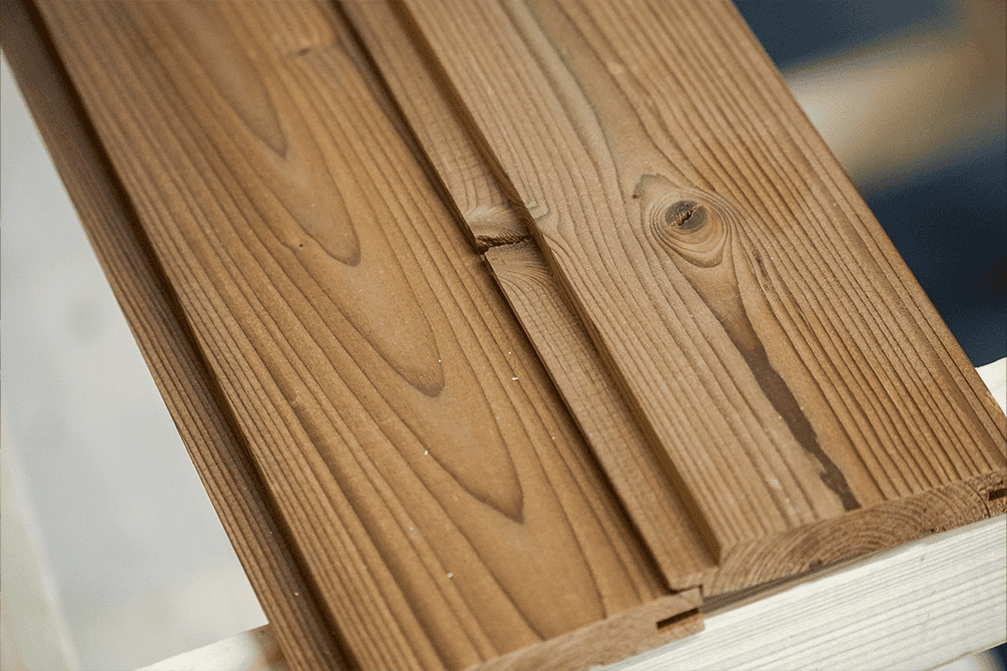
Every decision, from material selection to structural detailing, is made with long-term outdoor performance in mind. Thermo-treated timber is chosen for its stability in changing conditions. Insulated wall systems help maintain consistent thermal behaviour. Ventilation and drainage are designed to manage moisture effectively throughout the year.
Just as importantly, we design around the realities of British weather rather than ideal conditions.
Because the goal is not simply to create a sauna that performs well when new.
The goal is to create one that delivers the same experience hundreds and thousands of sessions later.
Most saunas fail within five years not because of a single catastrophic issue, but because small weaknesses accumulate over time.
Poor material selection, inadequate insulation, moisture management failures and inconsistent construction gradually reduce performance until the sauna no longer behaves as intended. While the structure may remain standing, the experience it delivers can be fundamentally different from what it once was.