Blog
What makes a sauna structurally sound

When people evaluate an outdoor sauna, they often focus on the visible details. The quality of the timber, the appearance of the interior, the heater specification and the overall design naturally attract the most attention.
What determines the lifespan of a sauna, however, is often hidden beneath the surface.
A structurally sound sauna is not simply one that feels solid when it is first installed. It is one that remains stable after years of exposure to heat, moisture, changing temperatures and regular use. Doors continue to close properly. Walls remain aligned. Heat behaves consistently. The overall experience changes very little despite constant environmental stress.
Achieving that level of durability requires far more than quality materials alone. It depends on how every element of the structure works together to manage movement, moisture and thermal load over time.
The frame is the backbone of the sauna
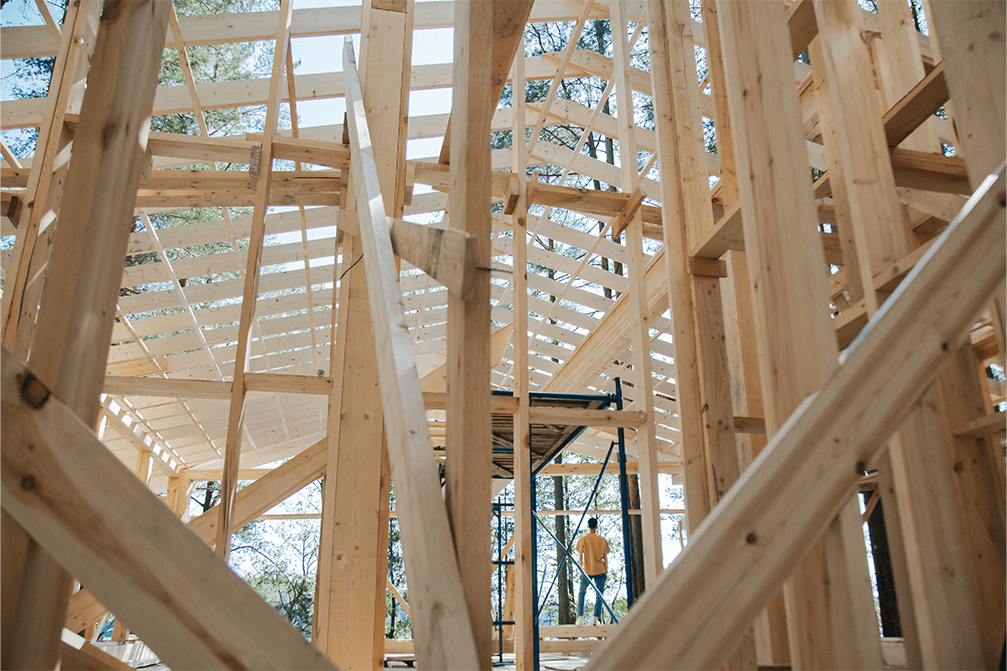
Every sauna relies on its structural frame.
While it is rarely visible once construction is complete, the frame determines how the entire building responds to the stresses of everyday use. Every heating cycle causes materials to expand and contract. Every season introduces changes in humidity, moisture levels and external temperature.
Without a strong, well-designed frame, those forces begin to affect the wider structure.
The early signs are often subtle. A door may require slightly more force to close. Small gaps may develop around joints. Heat retention may become less consistent than it once was. Individually, these changes can seem insignificant. Together, they indicate that the structure is gradually losing stability.
A robust timber frame distributes these stresses throughout the building, allowing the sauna to move as intended without compromising performance. This stability becomes increasingly important as the structure ages.
Material stability matters as much as strength
One of the biggest misconceptions in outdoor construction is that stronger materials automatically create more durable buildings.
In reality, stability is often just as important as strength.
Outdoor saunas experience continual fluctuations in moisture and temperature. Materials that react aggressively to these changes can create ongoing movement within the structure, even if they are technically strong enough to withstand the loads involved.
This is why timber selection plays such a significant role in long-term performance. Some woods absorb and release moisture more readily than others, resulting in greater expansion and contraction throughout the year.
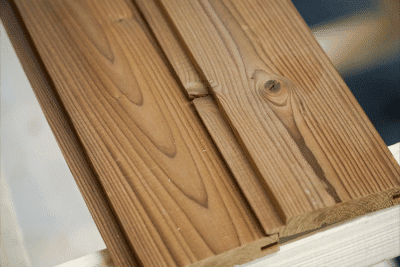
Thermo-treated timber offers significant advantages in this environment. By reducing the wood’s moisture content during the treatment process, it becomes more dimensionally stable and less reactive to changing conditions. This helps the sauna maintain its shape, alignment and thermal performance over time.
The goal is not simply to build a structure that feels strong on day one. It is to create one that remains stable after thousands of heating cycles and years of exposure to the elements.
Precision construction influences long-term durability
The quality of a sauna is often determined by details that are measured in millimetres.
Even minor inaccuracies during construction can become more significant over time. Small inconsistencies in panel alignment, framing connections or joint construction may not be noticeable initially, but repeated expansion and contraction gradually expose these weaknesses.
A sauna is constantly under stress. Every time it heats up, cools down, absorbs moisture or dries out, the structure experiences movement. Precision construction ensures those movements are controlled and predictable rather than disruptive.
When components fit together accurately, loads are distributed correctly throughout the structure. The sauna behaves as a single, integrated system rather than a collection of individual parts responding independently to environmental conditions.
This often explains why high-quality saunas feel noticeably more solid and refined, even years after installation.
Insulation contributes to structural stability
Insulation is typically associated with energy efficiency and heat retention, but its benefits extend much further than reducing running costs.
Large temperature fluctuations place significant stress on materials. As surfaces repeatedly heat and cool, expansion and contraction become more pronounced. Over time, this can contribute to movement within the structure and place additional strain on joints and connections.
A properly insulated sauna experiences fewer extremes.
Heat builds more gradually, remains more stable during use and dissipates more predictably after each session. This creates a more controlled internal environment and reduces unnecessary stress on the building itself.
In this sense, insulation protects not only the user experience but also the structural integrity of the sauna over the long term.
Moisture management is fundamental to durability
Few factors influence structural performance more than moisture.
Outdoor saunas are exposed to rain, humidity, condensation and changing weather conditions throughout the year. At the same time, they generate significant levels of moisture internally during operation. Managing both sources effectively is essential.
A structurally sound sauna is designed to dry efficiently.
This requires more than simply keeping water out. It involves allowing moisture to escape naturally, ensuring adequate airflow and preventing water from becoming trapped within vulnerable areas of the structure.
Poor moisture management often leads to problems that develop slowly. Timber remains damp for longer periods, materials become less stable and deterioration begins to occur in areas that are difficult to inspect.
By contrast, a sauna that handles moisture effectively tends to remain more stable, require less intervention and maintain its performance for significantly longer.
Roof design plays a bigger role than many people realise
The roof experiences some of the most demanding conditions anywhere on the structure.
Throughout the year it is exposed to rainfall, wind, sunlight, frost and continual temperature variation. It must also manage water effectively while protecting the structural elements beneath it.
A poorly designed roof can introduce problems that affect the entire building. Water ingress, inadequate drainage and unnecessary loading all place additional strain on walls, joints and connections below.
Good roof design helps manage environmental pressures before they reach the rest of the structure. It directs water away efficiently, protects vulnerable areas and contributes to the overall stability of the sauna.
For this reason, roof construction should be viewed as a structural consideration rather than simply an aesthetic one.
Doors often reveal structural issues first
One of the quickest ways to assess the structural condition of a sauna is to look at the doors.
Doors rely on accurate alignment and stable openings to function correctly. As a result, they are often the first component to reveal signs of movement elsewhere within the structure.
If a sauna begins to shift over time, doors may become harder to open or close, seals may become less effective and gaps may begin to appear around the frame. While these issues may seem isolated, they often indicate wider structural movement.
A well-built sauna maintains square, stable openings even after years of environmental exposure and thermal cycling. This stability is usually a reflection of the quality of the entire structure.
Everything depends on the foundation
Even the most carefully engineered sauna can only perform as well as the base beneath it.
A stable, level foundation provides the platform that supports every other component. If the base settles unevenly or allows moisture to accumulate, stresses are transferred throughout the structure.
These stresses can affect alignment, heat retention and overall stability.
Good foundations do not attract much attention, but they are essential to long-term performance. Proper preparation, drainage and load distribution help ensure that the sauna remains structurally sound throughout its lifespan.
Without this stability, every component above it is placed under greater strain.
Structural quality influences the sauna experience
Structural integrity is often discussed in terms of durability, but its effects are felt every time the sauna is used.
A stable structure retains heat more effectively. Ventilation behaves more predictably. Doors and windows operate smoothly. Internal temperatures remain consistent. The entire environment feels controlled and reliable.
Most users may never consciously think about structural engineering while sitting in a sauna.
They simply notice that some saunas feel better to use than others.
More often than not, structural quality is one of the reasons why.
How True North approaches structural design
At True North, structural integrity is viewed as a performance requirement rather than a hidden technical detail.
Traditional timber framing, insulated wall systems and thermo-treated materials are combined to create structures designed specifically for long-term outdoor use in British conditions. Careful attention is given to moisture management, thermal stability and construction accuracy because each directly influences how the sauna performs over time.
Our aim is not simply to create a sauna that feels solid when it is installed. It is to create one that continues delivering the same experience years later.
A structurally sound sauna is built around stability, precision and long-term performance.
The frame, material selection, insulation, moisture management, roof design and foundation all contribute to how the structure responds to years of environmental exposure and regular use. When these elements work together effectively, the sauna remains reliable, comfortable and efficient long after installation.
The best outdoor saunas are not defined by how they look on day one.They are defined by how consistently they perform for years to come.