Blog
Heat retention explained: The difference between good and bad design

When most people think about sauna performance, they think about temperature. How hot does it get? How quickly does it heat up? How powerful is the heater?
In reality, those questions only tell part of the story.
The real measure of a sauna is not how much heat it can generate, but how well it can hold and distribute that heat once it has been created. Two saunas can reach exactly the same temperature and deliver completely different experiences. One feels calm, consistent and immersive. The other feels uneven, inefficient and surprisingly difficult to enjoy.
This is where heat retention becomes one of the most important factors in sauna design.
A well-designed sauna doesn’t need to fight to stay hot. The warmth feels settled and stable. The heater works efficiently, temperatures remain consistent and the environment feels predictable from one session to the next.
Poor heat retention creates the opposite experience. Heat escapes faster than it should, temperatures fluctuate and the sauna never quite feels balanced. The heater works harder, energy consumption increases and comfort suffers.
The difference is rarely visible at first glance.
It is usually built into the design itself.
Good insulation is the foundation of heat retention
Every outdoor sauna is constantly exchanging heat with the environment around it.
In summer, that challenge is relatively modest. In winter, particularly in the UK, the difference between internal and external temperatures can be dramatic. The greater that difference becomes, the harder the sauna must work to maintain stable conditions.
This is where insulation plays a critical role.
Effective insulation slows the movement of heat through the walls, ceiling and floor. Instead of constantly escaping into the outside air, warmth remains within the structure where it belongs. The result is faster warm-up times, greater efficiency and a noticeably more stable environment during use.
Without sufficient insulation, even a powerful heater will struggle to perform efficiently. The sauna may eventually reach temperature, but it will require more energy to get there and significantly more effort to stay there.
Over time, those inefficiencies become impossible to ignore.
Wall construction influences thermal stability
Insulation is important, but it only works as part of a wider structural system.
The thickness and construction of the walls have a significant impact on how heat behaves inside the sauna. Thin wall structures tend to respond quickly to external temperature changes. As outside conditions fluctuate, the internal environment follows.
This creates instability.
During colder weather, heat is drawn from the structure more rapidly. Areas close to the heater may become excessively hot while other areas struggle to reach the same temperature. Instead of a consistent thermal environment, you end up with noticeable variations throughout the room.
A more substantial wall system slows this process considerably. Heat moves more gradually through the structure, allowing the entire sauna to operate in a more controlled and predictable way.
The difference isn’t always obvious on a specification sheet, but it becomes very obvious during use.
Air leakage can undermine an otherwise good sauna
Even small gaps can have a surprisingly large effect on performance.
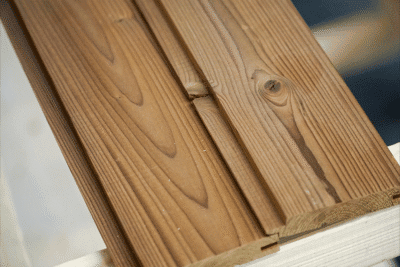
Warm air naturally seeks the path of least resistance. If doors, joints or panel connections are not properly sealed, heat will escape continuously throughout the session. At the same time, colder external air is drawn into the structure to replace it.
This process creates a constant thermal imbalance.
Many people assume poor heat retention is caused by the heater when the real issue is uncontrolled air leakage elsewhere in the sauna. No heating system can perform at its best if the structure itself is losing heat unnecessarily.
A well-built sauna feels thermally quiet. Temperatures remain steady because the structure is doing its job properly.
That sense of stability is often one of the clearest indicators of quality.
Internal proportions affect how heat is experienced
Heat naturally rises, which means the dimensions of the sauna have a direct impact on how efficiently that heat is used.
One common mistake is assuming that larger always means better. In reality, oversized interiors often create thermal inefficiencies. Excessive ceiling height allows large volumes of heat to collect above the user, where it contributes little to the actual sauna experience.
The result is a space that consumes more energy while feeling less comfortable.
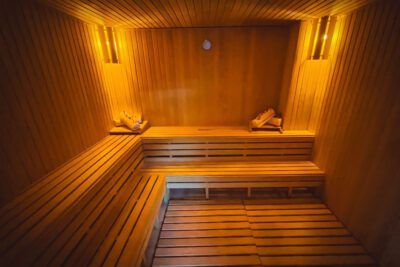
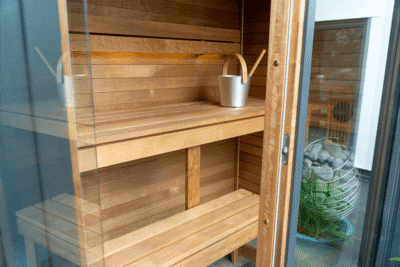
Good sauna design focuses on creating the right proportions rather than simply maximising space. Bench heights, ceiling heights and internal volume should work together to place the body within the most effective part of the heat zone.
When this balance is achieved, temperatures feel more even and the sauna performs more efficiently.
Glass requires careful thermal consideration
Large glazed panels have become increasingly popular in modern sauna design, and for good reason. They create a striking visual connection with the surrounding environment and can transform the overall experience.
However, glass behaves very differently from an insulated wall system.
Even high-performance glazing generally loses heat faster than a well-insulated timber wall. If excessive glass is used without considering the wider thermal design, the sauna can become harder to heat and more difficult to stabilise, particularly during colder weather.
This does not mean glass should be avoided.
It simply means it should be used thoughtfully.
The best sauna designs balance aesthetics with performance, ensuring that visual features enhance the experience without compromising thermal efficiency.
Materials influence how heat behaves
Heat retention is not only about preventing heat loss. It is also about how heat is stored and released within the sauna itself.
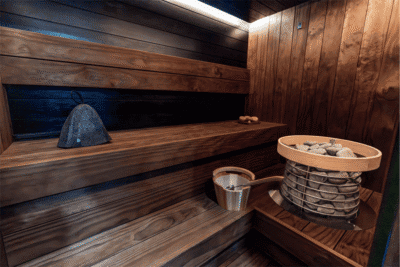
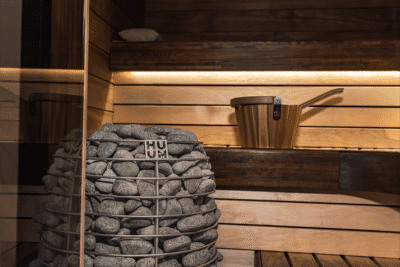
Different materials behave differently when exposed to sustained temperatures. Sauna stones, for example, absorb large amounts of thermal energy and release it gradually. This creates a softer, more stable heat profile and helps smooth out temperature fluctuations.
Timber also contributes to the overall thermal character of the room. Quality sauna materials absorb and release warmth in a way that helps create a more comfortable and predictable environment.
When materials are chosen carefully, the entire sauna feels more balanced.
The heat becomes less aggressive and more controlled.
Ventilation must support, not disrupt, thermal performance
A common misconception is that better heat retention means minimising airflow.
In reality, effective ventilation is essential for both comfort and performance.
Fresh air needs to enter the sauna while humid air is allowed to leave. Without this exchange, the environment quickly becomes stale and uncomfortable. At the same time, excessive airflow can strip heat from the room unnecessarily and reduce efficiency.
Good ventilation finds the balance between these two extremes.
When designed properly, it maintains air quality without compromising temperature stability. Most users never consciously notice good ventilation, but they immediately notice when it is missing.
Outdoor conditions expose weaknesses quickly
Every outdoor sauna is tested by its environment.
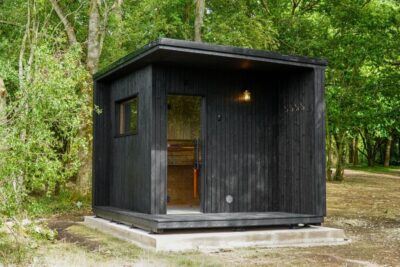
Wind, rain, cold temperatures and seasonal weather patterns place constant pressure on the structure. Designs that perform adequately in mild conditions can struggle significantly once winter arrives.
Wind increases heat loss from external surfaces. Cold air amplifies thermal transfer through weak wall systems. Moisture gradually exposes flaws in sealing and construction quality.
This is why outdoor sauna design must be approached differently from indoor construction.
The harsher the conditions become, the more important heat retention becomes.
Heat retention changes the entire experience
The benefits of good heat retention extend far beyond energy efficiency.
A sauna that maintains stable temperatures feels noticeably different to use. Heat remains consistent throughout the session. Recovery after opening the door is quicker. Different seating positions feel more balanced and predictable.
Perhaps most importantly, the sauna becomes easier to use regularly.
Consistency builds trust. You know what experience to expect each time you step inside. That reliability encourages routine, and routine is where the long-term benefits of sauna use are realised.
A sauna that performs consistently is a sauna that gets used consistently.
How True North approaches thermal performance
At True North, heat retention is viewed as a core performance requirement rather than a single specification.
Insulated wall systems, precision construction, carefully considered proportions and high-quality materials all work together to create a stable thermal environment. Every design decision is made with the goal of producing consistent, repeatable performance in real UK conditions.
The objective is not simply to achieve high temperatures.
It is to create a sauna that reaches temperature efficiently, holds it comfortably and delivers the same experience every time it is used.
Heat retention is one of the defining characteristics of a high-performance sauna.
While heaters often receive the most attention, insulation, wall construction, airtightness, ventilation, materials and internal proportions all play an equally important role in determining how heat behaves. When these elements work together, the result is a sauna that feels stable, efficient and comfortable in all conditions.
The best saunas are not necessarily the hottest.
They are the ones that hold heat well enough that everything else feels effortless.