Blog
How to compare saunas without getting misled

Comparing saunas is harder than it should be
Buying a sauna sounds simple in theory. You compare a few options, look at the specifications, choose the one that offers the best value and move forward with confidence.
In reality, most buyers quickly find themselves overwhelmed by conflicting information. Every manufacturer claims superior craftsmanship. Every sauna appears premium in photographs. Product pages are filled with technical specifications, impressive-looking features and marketing language that makes direct comparison difficult.
The challenge is that many of the things that truly determine sauna performance are not immediately visible. A sauna is not simply a collection of materials or features. It is a carefully balanced environment that must consistently produce heat, manage moisture and withstand years of use in changing conditions.
As a result, the most important questions are often the ones that never appear in the brochure.
Don’t start with appearance
Most buyers naturally begin by looking at design. Large glass fronts, contemporary cladding, integrated lighting and premium finishes create a strong first impression. A well-designed sauna should absolutely look good, but appearance alone reveals very little about how it will perform over time.
Some saunas are designed primarily to photograph well. They look impressive online and attract attention in a showroom, yet the construction behind those visual features may be relatively basic. A beautiful exterior cannot compensate for poor insulation, weak structural design or unstable materials.
Instead of asking which sauna looks best, start by asking how it has been built. Understanding what sits beneath the visible surfaces will tell you far more about the ownership experience than any photograph ever could.
Don’t assume a bigger heater means a better sauna
One of the most common mistakes buyers make is treating heater size as a measure of overall quality.
Manufacturers often highlight heater output because it is easy to understand. A larger number appears more impressive. However, a powerful heater does not automatically create a better sauna experience.
In many cases, oversized heaters are being used to compensate for weaknesses elsewhere in the design. If a sauna loses heat quickly through poorly insulated walls, inefficient glazing or air leakage, the heater has to work harder to maintain temperature. The sauna may still get hot, but it is doing so inefficiently.
A better question is how well the sauna retains heat once it reaches temperature. A properly designed sauna should not rely on brute force. It should create a stable environment where heat remains consistent with minimal effort.
Compare wall construction, not just timber thickness
Timber thickness is often presented as a key selling point, but on its own it tells only part of the story.
Many buyers are encouraged to compare the thickness of logs or wall panels, assuming that thicker automatically means better. In reality, the overall wall system matters far more than any single measurement.
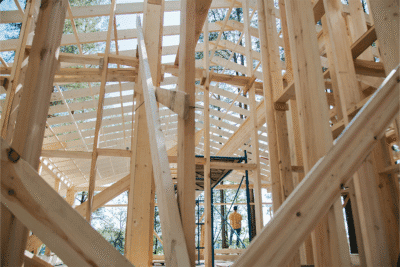
A well-designed wall assembly considers insulation, thermal performance, moisture control and structural stability together. An insulated wall system can often outperform a much thicker uninsulated wall when it comes to heat retention and efficiency.
When comparing saunas, look beyond the headline specification. Ask how the walls are constructed, what insulation is used and how the structure is designed to perform during colder months. Those answers will provide a much clearer picture of real-world performance.
Ask how it performs in winter
Most sauna marketing is created under ideal conditions. Blue skies, warm evenings and perfectly staged gardens make every sauna look appealing.
The more useful question is what happens when conditions are less forgiving.
How long does the sauna take to heat up on a cold January morning? How well does it maintain temperature when outdoor temperatures drop? How much does wind exposure affect performance? These are the situations that reveal whether a sauna has been engineered properly or simply designed to look good.
A sauna intended for year-round use should perform consistently regardless of season. If performance drops dramatically during winter, the problem is usually not the heater. It is often a reflection of insulation, construction quality or overall thermal design.
Ventilation deserves more attention than it gets
Ventilation is one of the least discussed aspects of sauna design and one of the most important.
Many buyers never ask about airflow because it is not a visible feature. Yet ventilation directly affects comfort, heat quality, drying efficiency and long-term durability. A sauna with poor airflow can feel stuffy and uncomfortable even when it reaches the correct temperature.
Good ventilation allows fresh air to enter, stale air to leave and moisture to dry naturally after use. It helps create a more balanced environment while also protecting the structure itself.
If a manufacturer cannot clearly explain how ventilation works within the sauna, it is worth asking further questions. Proper airflow should be considered a core performance feature, not an afterthought.
Focus on lifespan rather than features
Features are easy to compare because they are easy to list.
Bluetooth speakers, coloured lighting, app controls and integrated sound systems can all enhance the experience. However, they have very little influence on how long the sauna will last.
The components that determine longevity are far less exciting from a marketing perspective. Structural framing, insulation, moisture management, ventilation and material stability rarely make the front page of a brochure, yet they have a much greater impact on long-term ownership.
When comparing options, try asking a different question. Rather than focusing on what the sauna includes today, ask how it is expected to perform ten years from now. The quality of that answer often tells you everything you need to know.
Understand the materials being used
Not all timber behaves the same way outdoors.
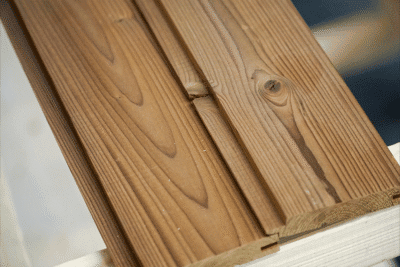
Different species respond differently to moisture, temperature changes and repeated heating cycles. Some remain stable for years, while others are more prone to movement, cracking or distortion over time.
Good manufacturers should be able to explain why specific materials have been selected and how they contribute to performance. They should also be able to discuss how those materials behave in real-world conditions rather than focusing purely on appearance.
Material choice is not simply an aesthetic decision. It is a performance decision that affects durability, maintenance requirements and lifespan.

Compare the ownership experience, not just the sauna
The sauna itself is only part of the purchase.
Installation quality, customer support, warranty coverage and aftercare all influence the overall ownership experience. A manufacturer may build an excellent sauna, but if support disappears after installation, problems can become frustrating and expensive to resolve.
Look for companies that are willing to discuss the full journey rather than just the product itself. Confidence in aftercare often reflects confidence in the quality of the sauna being delivered.
A sauna should be viewed as a long-term investment. The relationship with the manufacturer does not end when the installation is complete.
Be cautious of prices that seem too good to be true
Price is always an important factor, but it should be viewed in context.
If one sauna is significantly cheaper than comparable alternatives, there is usually a reason. Sometimes that reason is perfectly reasonable. Often, however, lower prices are achieved through compromises in materials, insulation, construction methods or support.
That does not mean the most expensive sauna is automatically the best option. It simply means that price alone is not a reliable measure of value.
Understanding what is included, how the sauna has been built and what compromises may have been made will provide a much clearer picture than comparing price tags alone.
Ask questions that reveal performance
The quality of a sauna often becomes clearer when you change the questions you ask.
Rather than asking how hot it gets, ask how evenly heat is distributed throughout the space. Instead of focusing on heater output, ask about insulation and heat retention. Instead of discussing appearance, ask how the sauna is expected to perform after years of use.
Manufacturers who prioritise performance tend to welcome these conversations because they have designed around them. Those discussions often reveal far more than a specification sheet ever could.
How True North approaches comparison
At True North, we encourage buyers to compare saunas carefully.
We believe the most meaningful comparisons focus on thermal performance, structural integrity, ventilation, material stability and long-term durability. These are the factors that determine whether a sauna becomes a lasting part of your routine or simply another feature in the garden.
The best sauna is rarely the one with the longest list of features. It is the one that delivers the same dependable experience year after year, regardless of weather, season or frequency of use.
Comparing saunas becomes much simpler when you focus on performance instead of marketing.
Appearance, feature lists and headline specifications can all be useful, but they rarely tell the full story. Construction quality, insulation, ventilation, materials and longevity provide a far more accurate indication of how a sauna will perform over the long term.
The goal is not to find the sauna with the boldest claims. It is to find the sauna that continues performing long after those claims have been forgotten. By asking better questions and looking beyond the obvious, it becomes much easier to identify genuine quality and avoid being misled by clever marketing.