Blog
Weather, exposure, and longevity: Building for UK conditions

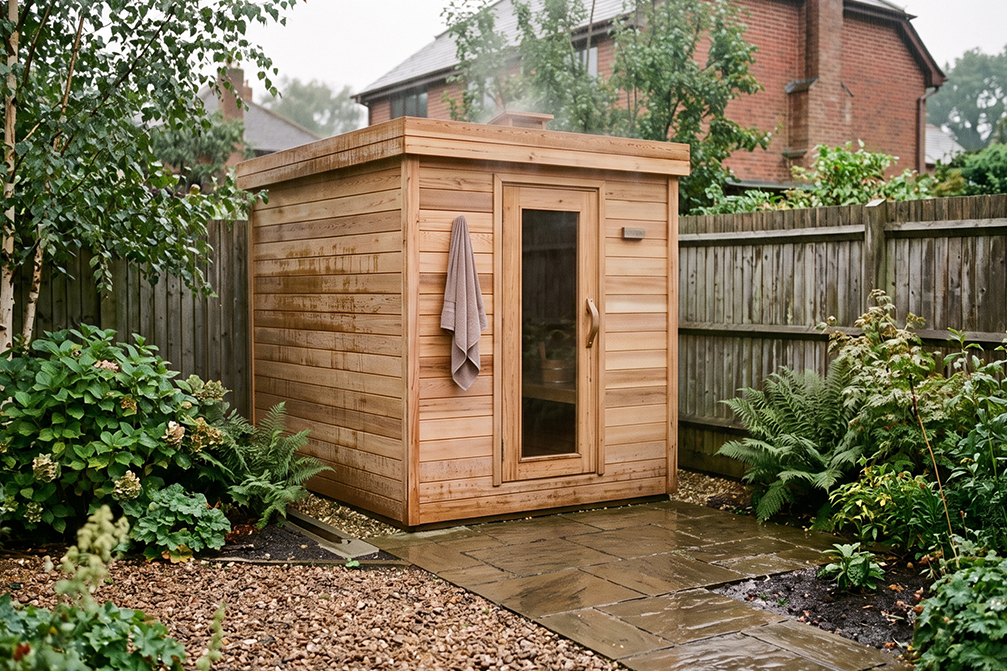
Buying an outdoor sauna is relatively straightforward. Building one that continues to perform well after years of British weather is considerably more challenging.
When people first compare outdoor saunas, they naturally focus on what they can see. The design, the timber, the glazing and the overall appearance tend to dominate the decision-making process. While these factors matter, they tell you very little about how the sauna will perform after five or ten years of exposure to the elements.
The UK presents a unique challenge for outdoor structures. Unlike climates that are consistently hot or consistently cold, British weather is defined by constant fluctuation. Rainfall, humidity, wind, frost and temperature changes all place stress on a building throughout the year. These forces may seem relatively minor on any given day, but over time they have a significant impact on performance and longevity.
This is why outdoor sauna design should never be judged solely on how it looks when installed. The real measure of quality is how the structure responds to years of environmental pressure while continuing to deliver a consistent sauna experience.
The challenge isn’t extreme weather, it’s constant weather
Many people assume outdoor saunas struggle most in harsh winters. In reality, the greater challenge in the UK is repetition.
Timber expands when it absorbs moisture and contracts as it dries. Materials respond differently as temperatures rise and fall. Wind-driven rain repeatedly reaches areas of the structure that may rarely experience direct water exposure in calmer conditions. These cycles happen week after week, month after month, year after year.
A sauna that appears perfectly solid during its first season may begin to reveal weaknesses over time if it has not been designed with these conditions in mind. Small movements in the structure can affect door alignment, seals can become less effective and areas that were once airtight may gradually allow heat loss.
The best outdoor saunas are not designed simply to withstand bad weather. They are designed to handle thousands of weather cycles over their lifetime without compromising performance.
Timber selection plays a major role in long-term stability
One of the biggest factors influencing longevity is the timber itself.
Not all wood behaves the same way outdoors. Different species absorb moisture differently, respond differently to temperature fluctuations and vary significantly in their dimensional stability. These differences become increasingly important as the sauna ages.
Lower-grade materials often experience greater movement as environmental conditions change. This can lead to cracking, twisting and gradual reductions in thermal efficiency. While these issues may not be obvious initially, they can have a noticeable impact on both appearance and performance over time.
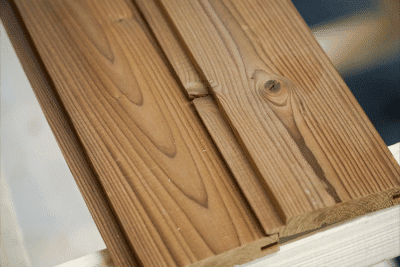
This is one of the reasons thermo-treated timber has become increasingly popular in high-performance outdoor saunas. The thermal modification process alters the structure of the wood, reducing its ability to absorb moisture and improving its stability in changing conditions.
The result is a material that responds more predictably to the realities of outdoor use. That predictability becomes particularly valuable after years of exposure to rain, humidity and seasonal temperature changes.
Insulation becomes even more important in the UK climate
A sauna’s ability to retain heat is heavily influenced by the environment surrounding it.
During winter, the difference between internal and external temperatures can be substantial. While the sauna may be operating at 80–90°C, outside temperatures can sit close to freezing. Without effective insulation, heat naturally moves through the structure, forcing the heating system to work harder to maintain stable conditions.
This affects more than energy consumption. It also influences how the sauna feels to use. Poorly insulated structures often experience greater temperature fluctuation, longer warm-up times and less predictable heat distribution.
By contrast, a well-insulated sauna creates a more controlled environment. Heat is retained more effectively, the structure reaches operating temperature more efficiently and the overall experience feels more consistent from session to session.
This is particularly important in the UK, where external conditions can vary dramatically between seasons and sometimes even within a single day.
Wind exposure can have a bigger impact than rain
Rain is often viewed as the primary threat to outdoor structures, but from a performance perspective, wind can be just as significant.
Strong winds increase heat loss from external surfaces and place additional strain on the heating system. They also accelerate temperature changes whenever the sauna door is opened, making it harder for the environment inside to remain stable.
This is why location plays such an important role in long-term performance. A sauna positioned in an exposed area of the garden may experience substantially greater environmental stress than one that benefits from natural shelter.
Features such as hedges, walls, fencing and thoughtful landscaping can all help reduce exposure without compromising the outdoor experience. The goal is not to isolate the sauna from its surroundings but to create conditions that allow it to operate efficiently throughout the year.
Over time, reducing unnecessary exposure can improve both performance and durability. The heater still matters, but only when it matches the sauna
While the heater is not the whole story, it remains an important part of the system.
The key is ensuring that the heater is appropriately matched to the size, insulation levels and design of the sauna. An undersized heater may struggle to achieve and maintain target temperatures, particularly during colder weather. An oversized heater can create rapid temperature swings and make the sauna harder to regulate.
Control systems are equally important. Reliable temperature control allows users to recreate the same conditions repeatedly, whether they are using the sauna for recovery, relaxation or performance-focused heat exposure.
Consistency is one of the most valuable aspects of sauna ownership. A system that behaves predictably encourages regular use and delivers a more reliable experience over time.
Moisture management is one of the biggest factors in longevity
Every outdoor sauna will encounter moisture.
The question is not whether water reaches the structure, but how effectively the structure manages it.
Good sauna design acknowledges this reality from the outset. Water should be able to drain away naturally, air should circulate around the structure and surfaces should have the opportunity to dry efficiently between periods of use. When these conditions are present, moisture becomes far less of a concern.
Problems typically arise when water becomes trapped.
Poor drainage beneath the sauna, inadequate airflow around the structure or details that allow moisture to accumulate over time can all accelerate wear. These issues rarely cause immediate problems, which is why they are often overlooked during the buying process. Their effects become visible years later.
A sauna that manages moisture effectively tends to age more gracefully, require less intervention and maintain its performance for significantly longer.
Construction quality becomes more obvious with time
The quality of a sauna is not fully revealed on installation day.
In many ways, the first few months are the easiest period in the life of the structure. Materials are new, components are fresh and environmental stresses have not yet had time to accumulate.
The real test comes later.
After years of heating cycles, changing weather conditions and repeated use, the differences between good and poor construction become increasingly apparent. Weak joints begin to move, poorly executed seals lose effectiveness and lower-quality materials start to show signs of deterioration.
Well-built saunas age differently. Doors continue to close properly, heat retention remains consistent and the overall experience changes very little from one season to the next.
That consistency is often the clearest indicator of quality.
Exposure also affects maintenance requirements
Every outdoor sauna will require some level of maintenance during its lifetime.
However, the amount of maintenance required is heavily influenced by environmental exposure.
A sauna positioned in a highly exposed location will naturally face greater demands than one protected from prevailing weather conditions. Wind, rain and prolonged moisture exposure all increase the workload placed on external materials and finishes.
Thoughtful placement can therefore have a meaningful impact on long-term ownership. Reducing unnecessary exposure not only improves performance but also helps preserve the appearance and condition of the structure over time.
In many cases, good positioning is one of the simplest ways to extend the lifespan of an outdoor sauna.
How True North builds for UK conditions
At True North, we design our saunas around the realities of British weather rather than ideal conditions.
Material selection, insulation levels, ventilation strategies and construction methods are all chosen with long-term performance in mind. Thermo-treated timber, insulated wall systems and carefully considered detailing work together to create structures capable of handling the demands of year-round outdoor use.
We also recognise that the environment surrounding the sauna is part of the system. Factors such as drainage, wind exposure and placement are considered during the planning process because they directly influence how the sauna performs over time.
The objective is simple: to build saunas that feel just as reliable after years of use as they do on the day they are installed.